Wednesday, May 16, 2018

"American Iron" moving to Thailand

Harley laying off 800 workers and closing Kansas City plant:
Harley-Davidson, the iconic American motorcycle company, is set to lay off hundreds of American workers at its Kansas City, Missouri factory while creating jobs in Thailand. 
After laying off nearly 200 American manufacturing workers last year, as Breitbart Newsreported, Harley-Davidson is expected to fully close its Kansas City manufacturing facility, leaving 800 workers out of work. 
Harley-Davidson executives say about 400 jobs will be sent to the corporation’s York, Pennsylvania manufacturing plant, but union workers allege their jobs are being sent overseas to Thailand.
Harley is not doing particularly well.  They have (so far) failed to attract younger riders, I expect because there are high quality alternatives at a much lower cost.  You're looking at $30k for a touring bike, and this is simply beyond the means of lots of younger riders.

And so cost cutting becomes imperative.  But it's sad to see such an iconic American brand struggle like this.

(via)

UPDATE 15 May 2018 20:55: Glen Filthie has some thoughts on Harleys and riders, and what riding is really about.  Recommended.

Tuesday, May 15, 2018

Suck it up, Buttercup


May is Motorcycle Safety Awareness Month


Good safety tips.

Germany's military may be weakest in Europe

Only 4 out of 128 Eurofighter Typhoons are combat ready.  And the rest of the military is even worse off:
Cost-cutting procurement strategies have caused problems elsewhere over the past year for the Bundeswehr:
  • The German Navy has had to refuse delivery of the first of its new class of frigates after the ship failed sea trials, and only five of the Navy's existing 13 frigates were capable of being deployed.
  • The last available German submarine was pulled out of service for repairs, as all the other submarines in the fleet sit in drydock or sit idle due to lack of replacement parts. (One of those submarines may now be back in service.)
  • The German Army was found to lack enough tanks and armored personnel carriers, or even enough basic equipment for soldiers, to fulfill its commitment to NATO's Very High Readiness Task Force at the beginning of 2019. While 105 out of 244 Leopard 2 tanks were called "ready for use," only nine could be fully armed for the VHRF.
  • Only 12 of 62 Tiger attack helicopters and 16 of Germany's 72 CH-53 cargo helicopters were available for exercises and operations last year; the rest were grounded for maintenance.
  • At any time over the last year, only three of the Bundeswehr Airbus A400M transport aircraft were ready to fly.
But never fear, the Bundeswehr remains confident:
And as Der Spiegel's Matthias Gebauer was told by a Bundeswehr source, "We can say with a good conscience that large parts of the [German armed forces] are mission ready, because there is currently no mission."
Can someone please help me understand why we still pay cash money to protect Europe?


Just how hard is it to communicate without NSA listening in?

I touched on this five years ago, and the answer then was "it's really hard but maybe possible if you're very, very careful".  In the last five years there have been a number of new tools introduced that may make this easier.  Perhaps more importantly, there is a growing tradecraft among leakers and the media that provides some useful techniques.

Robert Graham has a quite interesting article that touches on tools, techniques, and operational security that is worth your time. There's quite a lot of technology that can betray people who don't know how it works:
Photographs suffer the same problem: your camera and phone tag the photographs with GPS coordinates and time the photograph was taken, as well as information about the camera. This accidentally exposed John McAfee's hiding location when Vice took pictures of him a few years ago. Some people leak by taking pictures of the screen -- use a camera without GPS for this (meaning, a really old camera you bought from a pawnshop).
But the discussion on burner phones, tails, and open WiFi is interesting and useful.  It's still hard to hide your transmissions from prying eyes, but it may be a bit easier than it used to be.


Monday, May 14, 2018

Peter Grant's new book is out!

Peter Grant (aka Bayourenaissanceman) has his latest book out.  Get on over there.


Sunday, May 13, 2018

Homecomings - a B. Guest Post

For Mother's Day, a Chapter from Saving Grace - A Story of Adoption.  Saving Grace didn't get the literary fanfare that The Book of Barkley and Small Town Roads did (both won major literary awards) but  Dad was undergoing major surgery at the time and marketing was NOT my priority.  But it went on to be a #1 bestseller in 4 countries and was on Amazon outselling "I Know Why the Caged Bird Sings" by Maya Angelou which is just incredulous to me as that was an amazing literary piece.  I think the themes of animal and people adoption are universal.  I especially enjoyed writing it as I got to share more stories of my family, including my Dad and Mom, as well as work through, with words, the death of my beloved brother.  They are both very much missed today.

Chapter 3 - Homecomings

Thinking of my brother comes naturally whenever I’m driving. Because the story of Allen and me began with a car ride, the first with our mom and dad.

Mom and Dad grew up in Montana, playing together as children, marrying as soon as Dad got home from serving in the 8th Air Force, stationed in Great Britain. The only reminders of that relationship I have left are letters and pictures, carefully packed in a trunk that lay in the attic until my brother and I liberated it.

There are so many photos of an 8th Air Force Liberator flying among flak as thick as snowflakes, soaring desolate above land whorled with unrest, the craft solitary above the destruction that it would rain. There underneath the photos lies a stack of letters. Mom and Dad wrote to one another for four years while he was overseas, not returning Stateside once during that entire time. Reading them feels a little like eavesdropping, as you can almost hear the words as they formed---heartfelt, intimate. I opened one; it was just one single page, and I thought of the way their day stopped at the brink of it.

In these letters bridging the time and distance they had to be apart, there was talk of how much they missed one another; of how their families were faring; of good coffee and how Dad missed vegetables from the farm; of burning heat and a cold on the field that would murmur to your very bones. There was playful affection, there was unstated passion and stated promise. Some was in Mom's flowery script, the rest in Dad's meticulous, indomitable hand. "Is everyone there well?" Mom would ask, and Dad would reply that they were (though some were now only well beyond Lamentations). "How is the homestead?” Dad would ask, and Mom would reply, "Fine," not telling him that they were occasionally going hungry.

They spoke of the future, of their past. They did not speak of the aircraft that limped back to England only to crash on approach, their violent end felt through the ground like a vibration rather than heard. They did not speak of her working two jobs after her dad's death while logging, to support two younger brothers and her mom. So much spoken and unspoken, like two mourning doves calling back and forth across an endless summer---all now just held together by a blue silk ribbon.
Not all missives that went back and forth over the seas were good news. Just up the road from Mom's, the week after Pearl Harbor a neighbor stood by the mailbox with a piece of paper not even big enough to start a fire with, the envelope fallen to the ground as bland words exploded one by one and that family’s grieving began. There was only the notice, there was nothing to bury---though you don't need a wooden box to capture the form of courage and sacrifice.

I wonder how many millions of messages like that went out in old wars, not taking long to read, as there was no real time in it; not in that demarcation between the hope that someone lived, and that place where you knew that was no longer true,  when you wished that this moment existed only outside of time. There were only moments in which a written word hung in the air as if hopeful silence had been so long undisturbed that it had forgotten its purpose.

I look again at those letters Dad kept. The actual forming of the characters is uniform, flowing, like words pent up too long. The letters are sixty-some years old, powdery and delicate in my hand. But sixty years were just a moment ago for my dad, something as fierce and encompassing as war always standing out in his memory, no matter how many years distanced him from battle.

So he returned to her, they married, and my mom immediately became pregnant, only to go into labor many weeks too early. Their daughter lived only days, while Mom battled an infection that would leave her barren.

They were together, their dream for years. But although it was an abundant life---Mom working as a Deputy Sheriff, Dad getting his CPA license and finding a job with one of the big timber mills---their home was missing the sound of children.

So the long, sometimes painfully long process of adoption was begun. When it didn't happen immediately, they applied to be foster parents---however, they could get a child in their home, just to hear a child's laughter. I don't have all the details, but Allen and I came into their lives when we were very young.

Mom and Dad had intended on getting just one child, but having completed the paperwork, when they heard there were two of us there was no real discussion, only logistics. For they only had a child seat for one, for the three-hour drive home. My brother Allen, being the oldest, got the seat. They put me in a box.

Well, it was a large box, carefully padded with coats and a pillow, and lashed in tight to the back of the seat with a seat belt.
Still, years later I can hear my brother lean over with a grin on the re-telling of that story with "They liked me better!" and how we would laugh.

We came home to a post-war subdivision, houses popping up starting in the late ‘40s, with new streets like ours hubbing off them in the 1960's as the town prospered and people expanded their families in a time of peace and abundance.

Dad still lives there all these years later. Going home now to visit him as an adult I'm surprised how quiet it is outside; the kids all inside the local school, neighborhood moms, and dads both working much of the time these days. Off in the distance, the wail of a police siren. The ground is hard and knotted, the houses stare silently forward, not acknowledging anything that exists in their peripheral vision. The morning light falls down upon their steps in silence. That lack of sound does not seem odd, it is simply winter.

Dad slumbering in the back room, tiring easily at age 94, I sit in the chair by the picture window and look out at the same homes I saw as a child; and I think back to those glory days when Mom and Dad brought us home, how this whole neighborhood came alive. Mom's been gone many years; Dad outlived both her and my stepmom in this house. And although the family dynamic is different, the sounds of this home remain.

Especially during summer, the neighborhood took on another depth of sound. There was the bright, disorderly cry of lawnmowers firing up; the small tidy yards of an older neighborhood not taking all day to mow, but the precision of their care reflecting the owners’ pride in their homes. There were no homeowners association rules. One neighbor's bright purple door stood out at attention, but with the colorful flowers that normally adorned the front and the deep rosy hue of the brick, the color suited the house. There were a couple of kids on bikes, zooming up and down the sidewalks as off in the distance their dog barked for their return. Far away from the sound of church bells, there in the month of white lace and showers of rice, paced faithfully and serenely; like shafts of light among the soft green leaves, yellow butterflies dancing on the grass like flecks of the sun.

The sounds would continue into the evening: a summer shower off the lake releasing the scent of flowers into the damp air; crickets sawing away in the grass with an intensity you could almost feel as a tickle on the skin. There was the wave of a neighbor as he brought in the paper; the clink of a couple of glasses of Kool-Aid, sweet like nectar on the porch.

There was no formal neighborhood watch here, but we did look out for one another. Our parents noticed when the newspapers piled up at someone’s house and would check to make sure they were OK.  They paid attention to a strange car parked on the street, a teenage boy just stopping to visit with the pretty teenage girl down the road.

They would know who had a new child by the toys that sprouted in the yard like colorful flowers. Our moms would trade recipes and gossip over a fence, finding out who had been ill, who might need help with a new baby. For this wasn't just a neighborhood, this was a community---neighbor helping neighbor, the kids welcome at pretty much any home, stopping in on someone's mom if we needed a drink or the use of the bathroom.
Now, a lifetime later, the houses are the same but the neighborhood is not. I note the silent homes, a sign gone up for a quick sale, the owner has passed away; time-consuming not just courage but muscle and bone until nothing is left but a frail form draped in a white sheet, like a piece of furniture unused. We don't notice the exact time of leaving but can't help but speak of the remains. I note one house in disrepair, empty, likely a foreclosure; the factory's shutting down taking with it not just jobs but a lot of hope.

Ours was a good house to come home to, though; a place of refuge for two lost little birds.

As I sit in the quiet, a small sparrow blows onto the sill like a bright scrap of paper, his heart pumping in his throat faster than any pulse. He looks into the house, then away, then into the glass again as if listening, only to dart away as the clock chimes on the hour, then ceases. The chime fills the whole house. Perhaps it's just sound---or perhaps it's all time, grievance, and grief manifesting as sound for just one instant as planets and gears align. It's a moment wherein time seems to stop, the sparrow frozen on the sill. Only when that sound stops does time come to life, and by then the bird is gone.

The only sound now is that of breath and the tick of the old clock. I don't deliberately listen to it, the ticks seemingly beyond the realm of hearing; then in a moment, with that one tick your ears respond to, you are acutely aware of the long diminishing train of time you did not hear. How many ticks in this house in 50 years? How many after I am long gone? Yet I feel the presence of others that have lived here, for they perhaps aren't truly dead but simply were worn down by the minute clicking of small gears. The echo of those who sat in this room do not disturb me; they are part of this house. Just like the sound of wood, its creak one of murmuring bones; and the air that taps on ancient glass speaks of deep winds that witnessed more than time.
Dad resting quietly, I take a quick walk before making his dinner, after which we will call Allen to catch up before seeing him on the weekend. As the neighborhood ticks a slow and steady beat outside, there comes the rumbling of the trains, the tracks a half mile away carrying a sound on the air that is as comforting as childhood. I watch the movement that is static serenity and labored exhaust, a rhythmic click-click as it moves away through eternal trees, faded to thick sky, the train displacing air.

Shadows lengthening, I hurry back to the house. The tick of my watch and the sound of the train dissolve away as if running through another place, someplace far from where this life ended up. I approach the house I grew up in, the porch glistening with a sheen of ice, its empty lattice the front guard of circumstance waiting for summer flowerings.
I think of the inordinate ticks of chance it took to bring my brother and me to this home, through which we were so blessed to be here. In the air scented with trees, I ascend the steps, clutching the old key to the back door, there on a little ring with a train etched on it. In the growing dark, I don't really see it, but I feel it in my hand, clutching that little anchor to a life lived here long ago---a life unexpected but as welcoming as home. 

The house sighs as I open the door. I catch a glimpse of myself in the mirror, moving away from its reflection into the warmth, my form darting out of sight; the sound, tick-tock-tick-tock, a wisp of air that breathes life back into this home. - LB Johnson

Beverly Sills, La Traviata, and Mom

Saturday always meant the Texaco Metropolitan Radio Network on Saturdays.  No matter what she was doing, Mom would always tune in and listen while she was doing whatever was on her to do list. In the 1970s, this meant that Beverly Sills was heard around the house rather a lot.


And for good reason.  She was one of the great sopranos of the time.  She was also very popular beyond opera circles, no doubt due to her irrepressible personality (she was often referred to by her nickname, "Bubbles").  Here she is on the Muppet Show singing "Pigoletto".  I remember Mom particularly enjoying this episode.


It was a time when a much broader segment of the population would follow art.  When Sills retired from the Met in 1980, Carol Burnett sang a duet with Bubbles.  Of course it was televised.


It was a different world.  But Mom loved all this music.  Happy Mother's Day to all Moms out there.

Saturday, May 12, 2018

Friday, May 11, 2018

Happy 100th Birthday, Richard Feynman

Odd that Google didn't go a thingie for the day.  But not everyone forgot.

He was one of the physicists on the Manhattan Project, and in fact roommates with Spy and traitor Klaus Fuchs there.  Many people have heard of his safe cracking there, but he also liked to tweak the guards - to the point that he got arrested:


He also played bongos.  He was pretty good, actually:


But he saw through bureaucracies, which is why he was the only one that didn't get the wool pulled over his eyes on the Challenger Commission.  I'd love to have his opinion on Climate Science, but sort of think that I do:

Thursday, May 10, 2018

The Pan Am Clipper that flew around the world after Pearl Harbor

This is one heck of a flying story:
LAGUARDIA TOWER LAGUARDIA TOWER. THIS IS PAN AMERICAN CLIPPER NC18602 INBOUND FROM AUCKLAND NEW ZEALAND. DUE TO ARRIVE PAN AMERICAN MARINE TERMINAL LAGUARDIA IN SEVEN MINUTES. OVER.
It left San Francisco on 1 December 1941 bound for Auckland, NZ.  They were two days out from Hawaii when they heard of the Japanese attack, and the Pacific route back from New Zealand was closed.  Instead, they flew across Australia, Java,  Ceylon, Africa, Brazil and up to New York the "long way around".

Along the way they pushed the airframe far beyond what it was designed for.  The crew adapted to the problems, they avoided being shot down over Java or crashing on takeoff from the Nile.  Giants strode the Earth in those days.


Wednesday, May 9, 2018

How's all that UK Gun Control working out?

But I thought it was just us Cowboy Yanks that had a problem:
SCOTLAND Yard has sent out extra patrols in London after a blood-soaked Bank Holiday weekend in which a teenager was shot dead and boys aged 13 and 15 survived being blasted with a shotgun. 
Two more men were shot or stabbed and three were doused in acid as the capital's shocking violence claimed yet more victims.
London is turning into Chicago.  But Moms Demand Relevancy in no doubt relieved that more than half the casualties were stabbings and acid.

At least their top cop is honest:  'We are doing all we can to address this.'  Translation: when seconds count, the police are minutes away.

The Gun Control movement has blood on its hands.

The Uber self-driving car software decided to kill Elaine Herzberg

This is an ugly example of why I've been posting about the dangers of self-driving cars for so long:
The fatal crash that killed pedestrian Elaine Herzberg in Tempe, Arizona, in March occurred because of a software bug in Uber's self-driving car technology, The Information's Amir Efrati reported on Monday. According to two anonymous sources who talked to Efrati, Uber's sensors did, in fact, detect Herzberg as she crossed the street with her bicycle. Unfortunately, the software classified her as a "false positive" and decided it didn't need to stop for her.
A "False Positive" is when something is incorrectly classified.  A medical example is where your doctor tells you that you have cancer when you actually don't.  False positives are a huge problem in software engineering - anyone who has ever had your antivirus block something by mistake has direct experience with this.  Software that has too many False Positives is unusable.  Needless to say, software developers put a huge amount of effort into reducing False Positives.  The Ars Technical article describes this tradeoff pretty well:
Software designers face a basic tradeoff here. If the software is programmed to be too cautious, the ride will be slow and jerky, as the car constantly slows down for objects that pose no threat to the car or aren't there at all. Tuning the software in the opposite direction will produce a smooth ride most of the time—but at the risk that the software will occasionally ignore a real object. According to Efrati, that's what happened in Tempe in March—and unfortunately the "real object" was a human being.
That seems to be what happened here.  The Uber software developers put in a bunch of code that analyzed potential obstacles that have been identified, to see if the item is likely to be a False Positive.  It decided that Elaine Herzberg was a False Positive and ran her over.

There are certainly more situations like this hiding in the software algorithms.  Uber can no doubt improve this particular failure, but this is probably going to be an ad-hoc patch to their decision algorithm that won't address other similar situations.  We can't know how many of these patches to the decision tree will be possible before it collapses under its own weight.  Patching an algorithm can introduce new bugs and so it's not clear when the system will be safe enough to use.  If ever.


Spell checkers fix spelling mistakes, but introduce other ones - there's a whole Internet meme about unfortunate autocorrect mistakes.

And this discussion entirely ignores the problem of False Negatives, where the software simply misses something.  This is like the doctor saying that you don't have cancer when you actually do, or a self-driving car not understanding that a toddler is an obstacle.

Get ready for more situations like this one.  Nobody really understands how the software works, including the developers.

Still Life and Quantum Mechanics - A Brigid Guest Post


It was once said in an age-old axiom, that an object cannot occupy two positions at the same time. Yet now, with today's technology, it may be argued that it is just possible to do that. The number of places science can go is far greater than I ever believed, even growing up reading Clarke and Asimov at every turn. Most physicists today trying to unite Einstein’s theory of gravity with quantum mechanics focus on microscopic realms beyond the reach of any conceivable experiment. Perhaps the solution that eluded Einstein is much closer at hand, in the strange territory where quantum mechanics just barely emerges into the human world. And we could be in two places at once. Or occupying the same position at two different times. Or fervently wishing we could

You've all had days like that when simple things went awry, plans made that mattered little to you, mattered much to others, things said, bridges burned, moments that repeated themselves for weeks or months in your head. If only I'd done this, if only I'd said that. Moments in which you wish you could turn back on itself as if you've never been there. Moments that repeat themselves in your memory, minute by minute, wrong place, wrong time.

Things happen when it is time for them to happen they say, and those moments like this long ago likely were meant to be. Perhaps today is, as well. It's a sentimental notion, wishful thinking, or to some, a projection of some great plan by some divine power. But where would we be without wishful thinking? How much hard-bitten logic is there in the world? Would an electron have split with simply cold hard logic, and not a bit of wishful thinking by minds whose conceptions are beyond logic. How much hard reasoning is there really? Maybe somewhere out there in the world, there is a place where reason is never as comfortable as a familiar sweater, where thought is as flat as a glass of stale ale left forgotten on the counter when the phone rang.

There are people happy to live that way, who lie in quiet acceptance of what is thrust upon them. People who numb the reaches of their mind in the same way someone with chronic pain eases their movements with pharmaceuticals. That person thinks there could be more, that possibilities exist, but there is too much effort involved in the motivation to take them there. It would mean giving up what is safe, getting up, moving forward, and who knows if the outcome would be the best thing they ever experienced, or simply shed more light on a world they would prefer stay comfortably dim. Best to stay still, quiet, and in the dark, they say.

Certainly, such a place is safer; where no smudge of desire affects debate, prediction is not contaminated by untried theory and actions aren't clouded by concealed agendas. Still, it is a world flat and colorless as tap water. A world I don't want to live in.

I still have moments where the lone tear for things past come unbidden, yet in each day in me is an increased curiosity for the world around me and what I can take from it, even if reaching for it sometimes causes me to teeter on the edge of a precipice in which only my fate echoes. D.H. Lawrence wrote that in every year we pass an anniversary unaware. That of our own death.

I regularly visited that place. Authors such as Laurence Gonzales write about it in Deep Survival. Where we, as adventurers of the world, circle and circle, climbing faster and higher, up to that spot marked X. That spot that will mark their own demise, flirting with it, teasing, poking the bear. I've seen it enough to recognize and know when I need to stay, and when it's time to leave.

You can do the same in an ordinary life, you can fall off a ladder and break your neck on a lunch break, but we do that blindly. In a life fully lived we engage our fate deliberately, we speak the words we may later regret, but we have to say them. We engage life as an indefatigable opponent that others will wish to tiptoe by, so not to awaken it. We risk our necks, and we risk our hearts, both, cajoled by the spirit of adventure that whispers to us from the dark like a lover, with honeyed voice and strong arms that draw us out of our complacent sleep.

I look at the photos around me on the mantel. Behind a dogsled in Alaska, perched on the side of Mt. Rainer or Mt. Hood with friends, in the pilot's seat of a T-6, face flush from doing aerobatics, in one frame, a leaf plucked from the upper levels of an alpine slope. There's a photo of my only brother and my beloved dog Barkley, there before that month that took them both from me to sudden aggressive cancers. I look at pictures of the last 15 years, time spent alone, graduating from the academy, giving a lecture at a university, a dinner party for friends, Mexican train dominoes and much laughter and beer.   I look at more recent pictures, of paths taken, not always straight, but as pristine and intact as the road to glory itself. I look at other frames, vacated or new, awaiting new photos, noting those places to be filled by a heart that is. I am still an adventurer, I'm just an older, wiser explorer of the world, whose limbs and heart though tested still yearn for that last great adventure

I am two women, at the same place, at the same time. The woman here at the apex of life, and the young woman in the photos seeking untarnished dreams. Two women; the one that I have was, and the one that I am. That woman today,  green eyes wise with age, will hopefully look at pictures from the past,  remembering the woman that I brought me here to this day, hopefully, wiser than the young woman I was, but retaining all of the dreams.

For although many years of life have passed, here still lies ahead miles of water to drift down, if only in my dreams, endless chasms of sky to cross; horizons that will tilt and change, fueled by dreams that I will take on until I can no longer draw breath. Dreams that bring with them moments in which I feel the rush of air and catch the scent of warm breath on my face, entering into that other plane of being in which I see my whole life ahead of me, death still beyond it. Moments in which, in the rush of emotion, I am outside of my body. Outside, yet in, looking away, looking beyond, in a rush or pleasure so intense that I know, that even with that risk, I will chase that moment again. I am in two places, within my heart and outside of it, tasting, seeking, reaching up to touch that last crimp with the tips of my fingers, to climb past that X into the light.

I will never fully understand the science that can transport matter or the circumstances of quantum mechanics that allows for wonders that we can't conceive of. But I can grasp the wonder of my world, in a volcanic rock formed in the earth that holds in place letters from those long gone. In a dog collar laying in revered silence on a small wooden box. In a pressed leaf in a photo frame; a leaf once green, nature's compromise between life and poison, a pragmatic conformation to circumstance, retaining beauty even as it fades to dust.

Tuesday, May 8, 2018

The Layman's Guide to understanding whether you can trust Global Warming data

Yesterday's post about the American Geophysical Union asking not to be made to release the data used in their published articles touches what is actually the single most important issue in Climate Science today - if you are only going to remember one thing about Global Warming, this is the issue to pay attention to.  Specifically, the one sentence for you to remember in order to understand the debate is this:
Can we trust the historical temperature data?
The data are mostly in terrible shape.  That doesn't mean that they are necessarily wrong, but rather the data is generally not what we hear from Climate Scientists, and is absolutely not what we hear from the Environment Press.  That's the bad news.

The good news is that a lot of people are looking at the data today, a lot more than were looking a decade ago.  This is why the AGU is whining about mean old Scott Pruitt making them release their data if their studies are going to be used to make EPA regulations.  After all, if the data were solid, they wouldn't hesitate to release it all.  But they won't, and so we suspect that it's the kicked dog that yelps.

The data are pretty interesting when you actually look closely at it.  This post (which is actually an old post from 2009) will give you a sense of just how big the uncertainties in the climate databases are.  Again, this doesn't mean the data is wrong - the data are what they are.  But it shows you how big a grain of salt you will want when people tell you that the temperature is the highest it's ever been.

Oh, and the punchline to this post?  The scientists who lost the data described here are the same ones who hid the decline.

------------------

The science is settled, but there's no data (originally posted 8//14/09)

Ever wonder how scientists measure temperature? With all the talk about Anthropogenic Global Warming (AGW), have you ever thought about where the data comes from? Somebody has to collect temperature data, right? So how do they do it?

Well, how do you measure temperature? If you're like me, you look at a thermometer.

So how many thermometers are being used to measure all of this AGW? I mean, if "the science is settled", someone should have an answer, right? Well, someone does have an answer, and it's quite interesting.

There are a lot of thermometers, at weather stations around the world. There didn't used to be, though. Until World War II there were less than a thousand world wide. Then there was a huge expansion of the number of weather stations, to a peak of over 13,000 during the Cold War. Note that this is the count of how many thermometers are in the 3000 longest continually operating weather stations. There are a lot (maybe 10,000) of new thermometers, but since the AGW debate is pretty uninteresting if you only look at the last 40 years, this is where the theory will be made or broken. (Actually, the data is very interesting, and suggests strongly that the new thermometers have thrown off the averages and may indeed account for 100% of the warming trend. You should readthe series of posts here, which include not only data, but source code).

This tells us several things:

1. There are not many weather stations that have been consistently measuring temperature in the same location for more than about 70 years. Maybe a thousand world wide, maybe a few more.

2. There are very few weather stations that have been consistently measuring temperature in the same location for over a hundred years. Two or three hundred world wide, tops.

3. There are almost no weather stations that have been consistently measuring temperature data in the same location since the end of the Civil War - essentially around the time when the Industrial Revolution was in full swing most places in North American and Europe, and everyone started belching CO2 into the air. Maybe 30 or 40 world wide.

Think about that last one - thirty or forty weather stations. That's what this whole AGW debate is centered on. A few dozen thermometers.

OK, so there really aren't many measurement locations. For those from which we have data, where's the data? Can we look at it? Check it for mistakes? I mean, after all this is supposed to be the biggest crisis in human history, the very survival of the human race is at stake, and we HAVE TO DO SOMETHING RIGHT NOW. Okay, but first can we look at the data?

Well, no. It's not that the scientists don't want to share it with you.  They don't, but that doesn't matter. You see, it seems that the original data sets have gone missing:
Data storage availability in the 1980s meant that we were not able to keep the multiple sources for some sites, only the station series after adjustment for homogeneity issues. We, therefore, do not hold the original raw data but only the value-added (i.e. quality controlled and homogenized) data. The priorities we use when merging data from the same station from different sources are discussed in some of the literature cited below. 
Oh, and that last link? It's not to your run of the mill right wing tool/hater site; it's to ground zero of AGW research.  Nature has a good post about the refusal to release the data, with a very interesting comments thread. The comments are running around 20 to 1 in favor of releasing the data so it can be verified.

The story is summed up nicely by Kenneth Green:
In a nutshell, the story is this. Canadian Steve McIntyre, co-demolisher of Michael Mann’s hockey stick chart, has been after the CRU to let him review their original climate data. For those unfamiliar with Steve, he is like a dog with a bone when it comes to data, and to validating statistical methodologies used in data representation. To come to Steve’s analytical attention is a bit like coming to the attention of a 60-Minutes news crew, only a few hundred times worse, particularly if you have anything to hide.
So Steve politely (He is Canadian, after all) requested the climate data from CRU, only to be refused on the grounds that he is not in academia. That’s where the story gets interesting, because Roger Pielke Jr. (who IS in academia), put in his own request, and was also turned down. Not because he didn’t qualify, but because the CRU apparently didn’t bother keeping the original climate data used in compiling the first surface temperature record!
...
In other words, there is now no way to test to see whether any of the “homogenizing” that has been done to the original record biased it in any way, or whether any of the subsequent “adjustments” to the data for things like urban expansion, and such can be validated.
Scientists and politicians are asking for maybe $50 Trillion to "fix" the problem, but don't worry, you can trust them. I mean, it's not like they have data or anything, but it's an emergency. Srlsy.

The questions about data quality are very, very serious, and the entire AGW debate is scientifically meaningless without an examination of the data, the methods, the mathematical models (especially the statistics, which are subtle and easy to mess up), and the source code of the climate models.

This last one in particular is an area I have relevant experience in, although we look for errors that cause security vulnerabilities. However, it's a truism that there will be at least one bug per 1000 lines of source code. How many lines of code are in the models? The process of higher math will tell us how many bugs to expect. How many of these would impact the results? You simply can't know until you look at it.

You say that the science is settled? Then give me the the data.

Monday, May 7, 2018

Damned Global Warming hypocrites

Rick emails to point to a scientific study saying that people who are most concerned about "climate change" are least likely to do anything about it:
We conducted a one-year longitudinal study in which 600 American adults regularly reported their climate change beliefs, pro-environmental behavior, and other climate-change related measures. Using latent class analyses, we uncovered three clusters of Americans with distinct climate belief trajectories: (1) the “Skeptical,” who believed least in climate change; (2) the “Cautiously Worried,” who had moderate beliefs in climate change; and (3) the “Highly Concerned,” who had the strongest beliefs and concern about climate change. Cluster membership predicted different outcomes: the “Highly Concerned” were most supportive of government climate policies, but least likely to report individual-level actions, whereas the “Skeptical” opposed policy solutions but were most likely to report engaging in individual-level pro-environmental behaviors. Implications for theory and practice are discussed.
[emphasis by me - Borepatch]  Hey, it's Science®!  You don't want to be a Science Denier, do you?

But this somehow reminds me of someone ...

HYPOCRITE, n. One who, professing virtues that he does not respect, secures the advantage of seeming to be what he despises.
- Ambrose Bierce, The Devil's Dictionary
Tagged "It' not easy being green" because, well, you know.

American Geophysical Union to EPA: But we want to hide the decline!

They love all the government grant money, but they really, really don't want to release the data with the papers they publish:
Recent reports indicate that EPA is planning to implement new policies that would require the agency to use only scientific data and information that is publicly available when considering science in rule-making. The legislation this policy is based on, the HONEST Act1, has received significant opposition from the scientific community and other organizations because of the potential for this policy to exclude data vital to informed decision-making.
Stop and think about that last bit - "informed decision-makers" have had access to secret "scientific" data that you and I can't see.  These decision-makers presumably have created environmental regulations effecting you and me, but we have no way of telling whether the "scientific" claims are bogus or not.

"Trust us", says that AGU.  After all, we wouldn't try to hide anything from you.  Like a decline.


I created this cartoon almost 9 years ago, but it seems to be as fresh now as it was then.  Sad that professional Climate Science® hasn't gotten one bit more honest even after being repeatedly caught out.
Tagged under "Junk Science" because, well, you know.

Been off riding

We rode to the beach this weekend, which is my excuse for the dearth of posting.  The local HOG chapter had a ride to Ocean City, Maryland.


Mine is in the front.  350 miles round trip was a pretty nice ride, and it didn't rain on us coming back which was extra nice.  The traffic, needless to say, was pretty bad in spots.  If it was that bad at the beginning of May on a not particularly great weather weekend, I can only imagine what it will be like in July.  Practicing my slow riding, I recalled why I never went to Ocean City the whole time I lived in Maryland before.

But it was a fun ride, as it always is with a group.  And the boardwalk is maybe the biggest I've seen. This really doesn't do it justice.  Click to embiggen.


Of course, we went to Thrasher's.  It had the longest line I saw on the boardwalk, but their fries are famous.


The 350 miles we rode is maybe as much as we rode all last year - all of the surgeries really put a crimp into our outdoor activities.  But it's good to be back in the saddle, even if the weather felt a lot more like April than May.

Friday, May 4, 2018

Stevie Ray Vaughan - Pride and Joy

A shout-out to the Queen Of The World, my Pride and Joy.

The end of the Boy Scouts


This has been coming for a long time, but is just another sad chapter in the War on boys.

Hat tip: Brock Townsend, who has more thoughts.

A firearms Koan


People will do anything, no matter how absurd, in order to avoid facing their own souls. One does not become enlightened by imagining figures of light, but by making the darkness conscious.
- Carl Jung

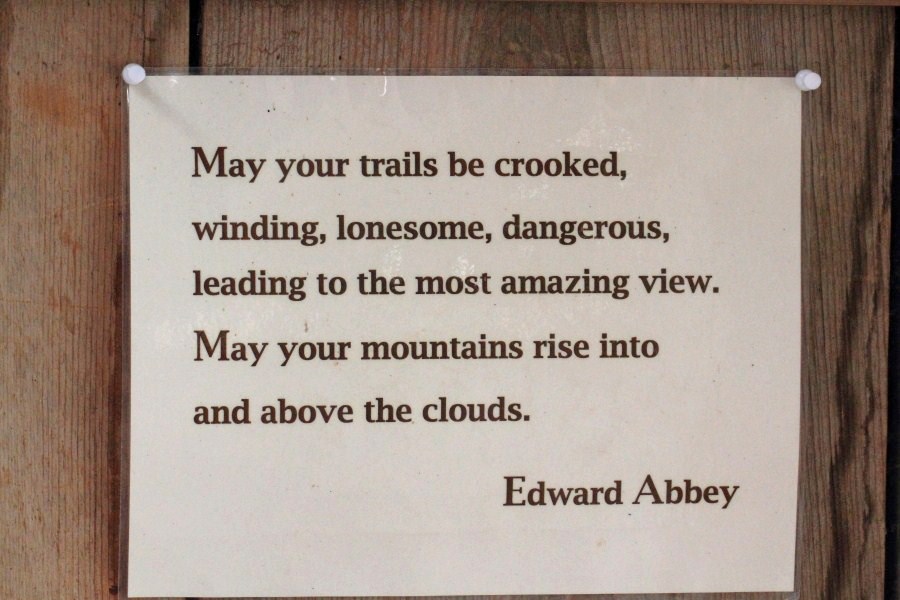
May Your Trails be Crooked - A Brigid Guest Post

It was early morning.  I had to be in my expensive midnight blue "court suit" so I could perhaps help win one for the good guys today.  I'm not an attorney, but I get to do the expert witness thing, or forensic testimony every once in a while, usually looking around going "where!?" when someone calls for "Doctor Johnson" (I'm still a six-year-old playing grown up most days).

I stepped out into the drive to the truck where I'd left it. The air was calm, the east was still grey, but it will soon burst forth in crimson garb any moment, the sky suddenly red with the firing, the burst of sun, before it finally, after hours of heat and volley, marches back into the West, wearily but not defeated. Overhead I hear the sound, the sound, a winged formation of geese performing their own maneuvers in grey, laying the field for a retreat from winter. I stopped in the drive to look up and admire them, the precision, the form, the beauty. Honk Honk!
I thought, "wow, I wish I had my camera".

What I actually said was CAC!  (you may need to brush up on  your Gaelic).

I know a fair bit about blood spatter, such as the greater the height from which a drop falls, the more it will spray out in a star-like shape. Let me tell you, blood has NOTHING on goose crap from 50 feet.

The jacket was going to have to go to the cleaners, probably the pants as well. I had no choice but to change into my only other clean suit,  the "oh we are so going to lose" brown one.  I'm not saying it was ugly or out of date, but. . .
Suit notwithstanding, the rest of the day went OK and our side won the case so perhaps my misadventures this morning were an anomaly.  After work, I  looked forward to running a couple of errands and then getting home to a furry dog, a happy husband, and a large bottle of Single Malt.

One of those stops was the car wash to get rid of the goose spatter. The bat truck was ever so shiny as I pulled out onto the road.

Honk honk honk! No, I hadn't cut anyone off.

SPLAT.

Damnú ort geese!

Days like these it's just best to go work out and get rid of some stress. I usually do 90 minutes with a personal trainer on Thursday, repeating the reps on my own on Saturday and Monday, but why not go to the gym tonight.
I made the mistake of foregoing my usual swimming and exercise bike and joining a new class that consisted of skinny soccer moms performing what I do believe was the dance scene to Saturday Night Fever to new age music.  I completed the class with all the fluidity and grace of a stepladder and crept back to my car, hoping no one got pictures.

The geese were nowhere in sight.

The last stop, the grocery store.  As I enter the store, I see an older gent with a beard and a cane having trouble with one of the powered cart. It looked like he'd had knee surgery, so I figured he was new to the carts.  I stopped and helped him, telling him I'd had to use one recently and then, with a conspiratorial wink said: "don't go too fast, they track your activities".
Apparently, he took my "being in the know" seriously because the next thing I knew he was following me around the store happily chatting away about Elvis's current location and how the aliens abducted him last Fall while squirrel hunting and took him bowling on Mars.

I lost him in the Tampax aisle.

Quick! To the parking lot!

Honk! Oh good, I just cut someone off. There's the finger! Wave!

As I pulled back into that driveway, I realized I'd planned to bake a cake for a couple of new LEO's who man the entrance at squirrel central. The Scotch would have to wait.
But you know, as I headed inside to break out the cake pans, I thought to myself - no one ever said being a grown-up was easy. There's machines and body parts that break, usually resulting in more bills to add to the bills you already get just by existing. There's dealing with other people and man's general nature to evoke religion or politics to justify what their ego or glands insisted upon no matter the outcome. There are battles and defeat and then there is glory.

But isn't it better to get out there as you are, to take chances, to fight, then to sit home on the couch, living on the sweat of the taxpayer or simply your own inertia, until nothing is left of you but silent, sentient meat that knows not the difference between trial and triumph?
No, you get out there and try.  You may get help along the way, not by your government, but by those that know and support you. But you live. You do it when you have all the energy of youth and health, you do it when all that is left to you, for now, is the grooved habit to survive. You do it because this is all you really know that you have for sure, this place, these hearts, here now, today, goose poop and all

So for me, I'll get up, get out, get dirty, get bloody and occasionally make a complete fool out of myself. Then I will come home with a smile, for I have lived. Then I can simply sit with those two souls that share this house that love me and tell them everything (even if one of them looks at me like "Blah Blah ABBY, Blah Blah ABBY).
Sometimes being a grown-up is hard.  But as  I sit here, my furry pal by my side and my husband on the way home, even if late, I realize the rewards are worth it. - Brigid

Thursday, May 3, 2018

Socialized Medicine leads to international man hunts

Friend and long time reader libertyman emails a pointer to a Boston Herald column by Michael Graham that's well worth your while.  In it, there was this that led me down a rabbit hole:
Which is why the American right has been so focused on the Alfie Evans story. They believe progressives have been eroding parental rights for years — denying parents the right to opt their children out of some sex-ed courses, or to decide that some books aren’t age appropriate for their own children, for example. They also see the inevitable logic of socialized medicine leads to cases like Alfie’s, and Charlie Gard’s and Ashya King — whose family fled the U.K. and became criminals to get his son experimental treatment in the Czech Republic. 
Ashya is still alive today, but only because he escaped the “health care” system of Great Britain.
I've posted a lot recently about Alfie Evans, and a year ago about Charlie Gard - both intentionally killed by Britain's National Health Service.  But I'd totally missed the story of Ashya King.  A quick Wikiwander led me to his story.

In short, the kid had brain cancer, the NHS didn't provide Proton Therapy, hospitals on the Continent did, and his parents took him over on a ferry.  The Wikipedia article writes about what happened next:
On 28 August 2014, an international manhunt for King and his parents commenced.[4] On 30 August, King and his parents were found in Velez Malaga, Spain. King's parents were arrested and their son was sent to a local hospital for urgent treatment.[5] They were held in prison for more than 24 hours and released when the request to extradite them to the United Kingdom was withdrawn.
Get that: his parents were imprisoned because they sought better health care for their child.  They were imprisoned.  I don't see how anyone can describe Britain as a free country.

Yesterday's post about the 1989 removal of the border fence between Hungary and Austria is a parable on the futility of trying to keep your population confined against their will.  But we see Britain doing this repeatedly.  The difference between Alfie and Ashya was that Ashya's parents didn't ask a Court, they just headed for a seaport and a ferryboat.  At that point the fury of the NHS was mitigated by cooler heads in the Foreign Ministry who hesitated to cause an international incident over this.

To this day, Ashya is cancer free, because his parents are jail birds.

It's long been a question as to why Leftist Institutions always devour those whom they are nominally charged with helping, but we see this in full flower in Britain's NHS today.

Wednesday, May 2, 2018

Happy Downfall of Communism Day!

Yesterday was Dirty Commie Day, so it's quite apropos to celebrate the Downfall of Communism Day today:
On 2 May, Hungarian soldiers began to dismantle the barbed wire and electric fencing along Hungary's border with neighbouring Austria. 
The communist governments of East Germany, Romania, and Czechoslovakia were furious. They feared that their own citizens would use this gap in the Iron Curtain to flee to the West. But Moscow did nothing.
And the dam broke.  I remember being stunned in September of that year when the East German commie government decided not to machine gun all of its citizens who were trying to travel to Hungary, but instead let them leave.  It was the end of the Iron Curtain, but that end all began on this day in 1989.


Quote of the Day - Magic Bullet edition

Comrade Misfit looks at "exciting" "new" ARX bullet designs and takes a step back from the hype:
The various new magic bullets tend to be lubricated, in part, with snake oil. My personal belief is that this is no place to be on the cutting edge. Stick with that which has been proven to work.
Heh.

Volkswagon and Audi cars remotely hackable

This is my shocked face:
A Dutch cyber-security firm has discovered that in-vehicle infotainment (IVI) systems deployed with some car models from the Volkswagen Group are vulnerable to remote hacking. 
Daan Keuper and Thijs Alkemade, security researchers with Computest, said they successfully tested their findings and exploit chains on Volkswagen Golf GTE and Audi A3 Sportback e-tron models (Audi is a brand part of the Volkswagen Group).
The exploit gives the attacker access to the entertainment system, so on the surface this doesn't look catastrophic.  But here's the fine print:
Keuper and Alkemade say the IVI system is also indirectly connected to the car's acceleration and braking system, but they stopped investigating the possibility of interacting with those systems fearing they might breach Volkswagen's intellectual property.
$100 says you could disable the brakes with this while you floored the gas.

But don't worry, I'm sure that this sort of thing will be impossible with self-driving cars.

Tuesday, May 1, 2018

Happy Dirty Commie Day!

It's the annual "Hug a Commie Bastard" day, so to help educate the idiots who think that Socialism is totes cool and everything, here is a selection of jokes told back in the Soviet Union.  Five minutes reading the dark humor of the people trapped behind the Iron Curtain will be a bracing tonic to the drivel that your pinko teachers taught you.*

First up: declassified CIA reports on soviet jokes (I'm not making this up, you know):


Click through to read the whole multi-page thing, along with some pretty interesting background material.  My favorite here is this one:
A train bearing Lenin, Stalin, Khrushchev, Brezhnev, and Gorbachev came to a sudden stop when the tracks ran out.  Each leader applies his own, unique solution.  Lenin gathers workers and peasants from miles around and exhorts them to build more track.  Stalin shoots the train crew when the train still doesn't move.  Khrushchev rehabilitates the dead crew and orders the track behind the train ripped up and laid in front.  Brezhnev pulls the curtains and rocks back and forth, pretending the train is moving.  Gorbachev calls a rally in front of the train where he leads a chant: No track!  No track! No track!
Remember, these are jokes told by the average Ivan on the street in the Worker's Paradise.  Now, remember I said that I'm not making this up - the CIA really did collect jokes from behind the Iron Curtain.  It's not sure when this started, but we know for a fact that at least one US President liked to tell them to people:


Next up: a more web-friendly collection.  This is my favorite from there:
A farm worker greets Josef Stalin at his potato farm.  
“Comrade Stalin, we have so many potatoes that, piled one on top of the other, they would reach all the way to God,” the farmer excitedly tells his leader. 
“But God does not exist,” replies Stalin. 
“Exactly,” says the farmer. “Neither do the potatoes.”
Heh.  And last but by no means least, Yakov Smirnoff's epic Light Beer commercial:


He also had a great joke on Johnny Carson's Tonight Show: You know what I love about America?  Warning shots.

So have a happy and humorous Dirty Commie Day.  Celebrate that the Usual Suspects™ haven't shoved it down our throats yet.

* Well, not you, gentle reader.  Work with me here.

Scientists: Post-birth abortion is super duper OK

Ignore for the moment that we have a perfectly fine word for "post birth abortion" (infanticide), this is pretty bold:
The article, published in the Journal of Medical Ethics, says newborn babies are not “actual persons” and do not have a “moral right to life”. The academics also argue that parents should be able to have their baby killed if it turns out to be disabled when it is born.

...

The article, entitled “After-birth abortion: Why should the baby live?”, was written by two of Prof Savulescu’s former associates, Alberto Giubilini and Francesca Minerva.

They argued: “The moral status of an infant is equivalent to that of a fetus in the sense that both lack those properties that justify the attribution of a right to life to an individual.”

Rather than being “actual persons”, newborns were “potential persons”. They explained: “Both a fetus and a newborn certainly are human beings and potential persons, but neither is a ‘person’ in the sense of ‘subject of a moral right to life’.
Unsurprisingly (but hysterically) the scientists complain that they're getting death threats.  Hey Doc, what makes you think that you yourself are a person, subject of a moral right to life?  Pot, meet kettle.

But let's take this idea and run with it.  After all, this concept is as old as time, and the the old Roman Pater Familias had life and death power over his children.  And all the kids marching for gun control is pretty annoying right now, so why don't we just extend co-blogger ASM826's excellent idea of no rights for kids until they turn 21 to allow post-birth abortion of them until they are 21?

I mean, the idea is no more stupid than the one that just got published in a Journal that deigns to call itself "Medical Ethics".  And scientists wonder why the public trusts them less than in years past.

Now that's how you tweet


HAHAHAHAHAHA!  Maybe next time they'll use Sharks with frickin' "lasers" too ...

Well played, Mossad.