People like to (as The Queen Of The World likes to say) complicate a cornflake. Case in point: dimmer switches. I've been swapping dimmer switches for simple on/off ones for literally (mumble mumble) decades. It's dead simple.
Except now it's not. Most new light bulbs are LED type, because Congressional Lobbyists for General Electric wanted all of us to pay $5/bulb instead of 50 cents. Thanks ever so much, Congress. But the Twilight Lone experience doesn't end just at sticker shock. Consider the failure points:
Your LED bulbs must be "Dimable". They won't dim if they're not, and you'll pay a premium for this.
Your dimmer switch must be for LED bulbs. It won't work with normal incandescent ones (assuming you can even get these anymore). You will (wait for it) pay a premium for this.
The new dimmer switches are bigger than the old ones. This isn't a problem if you have only one switch in the electrical box; this is a big, big problem (see what I did there?) if you have multiple switches in the same box, covered with a multi switch face plate.
That last one means that there are lights that I simply cannot dim, because I can't swap out an existing on/off switch for one of the new, high-falutin' (and expensive) LED dimmer switches because it simply won't fit.
Gee, thanks for jacking everything up, Congress. Nobody's life, liberty, property, or sanity are safe when you're in session. Jerks.
25 percent of these security vulnerabilities were immediately targeted for exploitation, with the exploit being published on the same day as the vulnerability itself was publicly disclosed.
Bold emphasis is mine. This is really not great at all.
Computer scientist Nikalaus Wirth passed away on New Year's Day. Wirth is known for creating the Pascal computer language - full disclosure: I wrote a fair amount of code in Turbo Pascal way back in the day.
Pascal passed out of fashion (if indeed it was ever fashionable) a long while back. What I remember of Wirth was his wit. Asked at a conference what the proper pronunciation of his name was. He answered that you could call him by name, in which case it was pronounced "Weert". Or you could call him by value in which case it was pronounced "Worth". Funny, in a really geeky way.
Interesting. There are a lot of surprises on this list, both stores I expected to use this tech who say they won't, and stores I expected not to who do.
This is an excellent layman's introduction to what the big deal is about the Herculaneum Scrolls. Short answer: it's a very big deal indeed.
This video gives background on why Herculaneum is such a unique site, and why the scrolls discovered there could only have been found there. Highly, highly recommended.
Goodbye 2023, and good riddance. Hello 2024 - may it be better than the last year.
2023 saw 1.5M page views which was pretty good. Strangely, a lot of this was traffic spikes (mostly from Google) to more or less random old posts. The steady-state traffic seems to be around 2500 page views a day. Still pretty good especially considering how infrequently I post these days.
2023 saw all of you leave over 1600 comments, which is great. I don't do a great job replying to comments but read (and appreciate) them all.
Unsurprisingly, these are all security related (well, the ones from 2023). That makes sense.
Thanks to the top referring sites: Knuckeldraggin My Life Away, The Ferrel Irishman, Raconteur Report, Normal American, The Silicon Graybeard, Gun Blog Blacklist, Busted Knuckles, Captain Capitalism, and Old NFO.
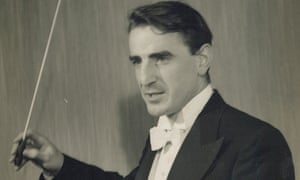
Ernest Tomlinson was an English composer active from around 1950. He
was an anachronism in that he wrote music with melody, in great contrast
to the a-tonal, arrhythmical dreck that is the wasteland of modern
classical music.
He may have single-handedly saved much of this sort of music in 1984.
The BBC decided to eliminate their archive of light classical music -
it was ever so unfashionable, old chap - and he got the entire archive.
50,000 works are now in the Library Of Light Orchestral Music.
Tomlinson was awarded the Member of the British Empire (MBE) in
recognition of his service to music.
This piece is simply a delight. Everyone will recognize the primary
theme - Auld Lang Syne, the traditional New Years' Eve song. But
Tomlinson weaves in brief snippets of 152 other pieces. It was a
completely unexpected pleasure to discover this, and a fitting high note
to say goodbye to 2023.
Ernest Tomlinson passed on in 2015. His obituary is worth a read:
After falling out of favour in the
middle of the last century, light music, once a major part of British
cultural life, has enjoyed a modest renaissance in recent years. Nobody
did more to encourage this revival of interest than Ernest Tomlinson,
who has died aged 90. He was a prolific composer, praised by the singer
and broadcaster Catherine Bott for
his “exceptional technical skills allied to a rare gift for melody”.
Equally, he fought to preserve the light music heritage by founding the Library of Light Orchestral Music and acting as consultant and performer for an important series of CD recordings.
He was an anachronism inn modern classical music, living an admirably
traditional life. Married 57 years, this part of his obituary stood
out:
He is survived by his children, Ann,
Geoffrey, Hilary and Linda, eight grandchildren and seven
great-grandchildren. Jean died in 2006.
Rest in peace, and thanks for the great music.
UPDATE 31 DECEMBER 2023 17:29: From the notes at Youtube, here are some of the different songs included in this piece. What a fun, very clever musical piece.
0:33- Auld Lang Syne 2:10 - Gounod’s Soldier Chorus from Faust 2:15 - The British Grenadiers 2:24 - Leroy Anderson’s The Rakes of Mallow 2:42 - Cesar Franck’s Symphonic Variations 2:52 - Chopin's Piano Sonata No.2, 2nd movement 3:09 - Elgar's Enigma Variations, main theme 3:37 - Beethoven's Symphony No.9, 4th movement, "Ode To Joy" 3:53 - Haydn’s St.Anthony Chorale 4:06 - Purcell's Abdelazer, "Rondeau" or Britten's The Young Person's Guide to the Orchestra 4:23 - Schubert’s Trout Quintet, 4th movement 4:32 - Haydn's Symphony No.94, 2nd movement 4:50 - Bach's Jesu, Joy of Man's Desiring 5:33 -Dvorak’s Humoresque no 7 5:41 -Foster’s Beautiful Dreamer 5:44 - Tchaikovsky’s Pathétique symphony 3rd movement 5:51 -A Life on The Ocean Wave 5:51 - Auld Lang Syne 5:54 - Khachaturian’s Adagio from Spartacus 6:14 - Mendelssohn’s Overture to The Hebrides 6:51 - Mozart's Piano Sonata No.16, first movement 7:09 - Handel's Entry of the Queen of Sheba 7:23 - Tchaikovsky’s Dance of the Little Swan from Swan Lake 7:27 - Bach’s Fugue in C minor from Well-Tempered Clavier 7:31 -Arthur Sullivan ... "Major General" (Pirates of Penzance) 7:32 -The Keel Row 7:44 - Bizet's Overture to Carmen 7:53 - This Old Man 8:00 - Thomas-Arne’s Rule-Britannia 8:08 - Strauss Jr’s Voice of Spring Waltz 8:53 - Tchaikovsky’s Valse no. 2 from Swan Lake 9:25 - Weber’s Invitation to the Dance 9:31 - Je veux vivre (Juliet's Waltz) from Romeo et Juliette by Charles Gounod 9:46 - Strauss. Jr’s Waltz from Die Flaudermaus 10:05 - Chopin's Grand Valse Brilliante 10:55 - Tchaikovsky - Serenade for Strings, 2nd movement 11:26 -Smetana’s Dance of the Comedian from The Bartered Bride 12:26 - Strauss. Jr’s Perpetuum Mobile Polka 12:35 - Mozart’s French Horn no. 4, 3rd movement 12:42 - Shenandoah 12:48 -Dvorak’s Slavonic Dance no 2 op.46 12:53 -Wi’a Hundred Pipers 12:59 - Offenbach's Can-Can Dance 13:02 - Schubert's Military March No.1, or Stravinsky's Circus Polka 13:13 - Offenbach's Can-Can Dance 13:22 - Rossini’s La Danza from Les Soirée Musicales 13:38 - Mysterious Pizzicato 13:44 - Bach’s A Riercar a 6 from The Musical Offering 14:24 - Rossini’s Overture to Semiramide 13:56 - Dark Eyes 14:07 -Koenig’s Post Horn Gallop 14:42 -Benjamin’s Jamaican Rumba 14:50 - Khachaturian's Sabre Dance 15:02 - Rossini's Overture to "The Barber of Seville" 15:04 - Bizet's L' Arlesienne Suite No.2, "Farandole" 15:07 - Glinka's Overture to "Ruslan and Ludmilla" 15:20 Goodnight, Ladies 15:57 - Tchaikovsky's 1812 Overture 17:56 - Verdi's Le donna e mobile, from "Rigoletto" 16:41 - O, Come All ye Faithful 17:47 - La Curachacha 17:58 The Girl I left behind 18:04 - Yankee Doodle 18:06 - Good King Winceslas 18:10 Sailor's Hornpipe 18:19 - Grieg’s Morning Mood from Peer Gynt 18:26 - Dvorak’s New World Symphony, 2nd movement
This is an old, old traditional song of parting, popularized by The Clancy Brothers and often played at both New Year's and funerals. This song is especially poignant to me in a year where I lost both Younger Brother Borepatch and my deeply missed Wolfgang. May 2024 be better.
The Queen Of The World got me a Barnes & Noble gift card, so we went out to an actual bricks-and-mortar bookstore (do they really have those? As it turns out, yes they do).
It was a blast, and a bit of a blast from the past. The whole Borepatch clan would go out Christmas shopping Back In The Day, and we'd spend an inordinate amount of time in bookstores. TQOTW and I were in the bookstore for a couple of hours. I'd forgotten just how much better book shopping at a bookstore is, as opposed to online.
Sure, online lets you get that book you already know about instantly, no fus and no muss. But there's no good way to browse. Basically, online handles the known knowns, but in the store is unbeatable for unknown unknowns.
Likewise with Tom Holland's new book Pax: War And Peace In Rome's Golden Age. Like with Strauss, I had heard Robin interview Tom Holland on the same podcast.
I had wanted Max Miller's new cookbook, Tasting History. We've seen Miller's videos here before (for example, Trader Vic's original Mai Tai). Miller recreates recipes from the past, going all the way back to ancient Babylon (!). I think the first of his videos I posted was about feeding the Roman Army. He is entertaining and the recipes looked really interesting and now that there is a cookbook of the recipes I thought I'd get it. We'll see if TQOTW lets me make any of these in her kitchen.
All in all, podcasters were well represented at the bookstore. Both of Mike Duncan's books werethere. Already had both, but was happy to see that he's currently in stock.
So it was a great afternoon with The Queen Of The World (who also scored some history books - she's not just a pretty face, she's also wicked smart). Bricks and mortar bookstores for the win.
TheCorwin Amendmentis a proposedamendmentto theUnited States Constitutionthat has never been adopted, but owing to the absence of a ratification deadline, could still be adopted by thestate legislatures. It would shield slavery within the states from the federal constitutional amendment process and from abolition or interference by Congress. Although the Corwin Amendment does not explicitly use the wordslavery, it was designed specifically to protect slavery from federal power. The outgoing36th United States Congressproposed the Corwin Amendment on March 2, 1861, shortly before the outbreak of theAmerican Civil War, with the intent of preventing that war and preserving the Union. It passed Congress but was not ratified by the requisite number of state legislatures.
Yeah, yeah - Wikipedia. But the article plays it straight up.
So if the war was about slavery, why did both houses of Congress pass this amendment, and why did the President sign the bill, sending it to the States for ratification? And oh by the way, Congress passed this without the Representatives from the seceding States.
And Abraham Lincoln - the "Great Emancipator" himself did not oppose the Amendment.
So the War was all about slavery, but Congress was playing 6-dimension chess or something, right?
[rolls eyes]
I'm no fan of Haley, but she is also right that the question was a liberal plant. Her response might have been bad politics in 2023, but she is 100% correct on the facts.
But while facts are stubborn things, so is the ignorance and arrogance of the media (including the ostensibly conservative media). Remember, the history of that war as taught today is retarded.
The Osage Nation won a massive ruling in Tulsa federal court on Wednesday that requires Enel to dismantle a 150-megawatt wind project it built in Osage County despite the tribe’s repeated objections. The tribe’s fight against Rome-based Enel began in 2011 and is the longest-running legal battle over wind energy in American history.
...
The decision by U.S. Court of International Trade Judge Jennifer Choe-Graves is the culmination of 12 years of litigation that pitted the tribe and federal authorities against Enel. During the construction of the project, the company illegally mined rock owned by the tribe, and it continued to do so even after being ordered by the Bureau of Indian Affairs to stop. Instead of halting work, the company sped up construction. Enel must now remove the 84 turbines that it built on 8,400 acres of the Tallgrass Prairie located between Pawhuska and Fairfax. Removing the turbines will cost Enel some $300 million.
As you might expect, the Oklahoma State courts were corrupt - with the Chief Justice of the OK Supremes benefiting from the project. But the Federales were different, and ruled for the indians. It looks like there's very little chance of an appeal, as the US Supremes ruled on a very similar case in the not so distant past.
And this bit is spot on:
By thrashing Enel in court, the Osage tribe not only stands to collect millions of dollars in damages and the removal of the loathsome turbines, it also has handed Big Wind the biggest public relations debacle in its history. It’s not just that the wind industry lost; it lost to a Native American tribe. That’s a particularly bad look when it comes to the branding of wind energy as “clean,” “green,” “sustainable,” and, of course, “renewable.”
The stockings are now up, but there are only two. Wolfgang had a stocking with two feet (he had twice as many feet as we do, right?). He sure loved Christmas, knowing he was going to get Puppy Loot.
Now we just have memories. I sure miss you, buddy.
All of the big pharmacy chains in the US hand over sensitive medical records to law enforcement without a warrant—and some will do so without even running the requests by a legal professional, according to a congressional investigation.
...
They include the seven largest pharmacy chains in the country: CVS Health, Walgreens Boots Alliance, Cigna, Optum Rx, Walmart Stores, Inc., The Kroger Company, and Rite Aid Corporation. The lawmakers also spoke with Amazon Pharmacy.
All eight of the pharmacies said they do not require law enforcement to have a warrant prior to sharing private and sensitive medical records, which can include the prescription drugs a person used or uses and their medical conditions. Instead, all the pharmacies hand over such information with nothing more than a subpoena, which can be issued by government agencies and does not require review or approval by a judge.
This sure seems like a violation of HIPAA, not to mention that pesky Fourth Amendment.
An Atlanta tech company's former COO has pleaded guilty to a 2018 incident in which he deliberately launched online attacks on two hospitals, later citing the incidents in sales pitches.
Under a plea deal he signed last week, Vikas Singla, a former business leader at network security vendor Securolytics – a provider to healthcare institutions, among others – admitted that in September 2018 he rendered the Ascom phone system of Gwinnett Medical Center inoperable.
...
After all of the events had transpired, Securolytics began emailing potential clients regarding new business opportunities, citing the publicized attacks.