Wednesday, July 11, 2018
How to get Blogger to send email notifications for comments
This broke a month or two ago. ChickenMom has the info on how to get it unbroken.


Tuesday, July 10, 2018
I think this is the only post I'll make about Trump's SCOTUS nominee
Well, about the idiotic reaction to it, at least.
For the three of you who don't get the background, there's this:
how much maize would it take for you to change your mind https://t.co/w68zinPxhz— Michael Malice (@michaelmalice) July 10, 2018
For the three of you who don't get the background, there's this:
— Sal the Agorist (@SallyMayweather) July 9, 2018
For anyone who *still* doesn't get it, my Potawatomi forebears would tell Senator Warren that she's a fake indian. Unlike her, I have documentation from the Potawatomi Nation.

The Age of Reform is upon us

- The Republican Party has been in a civil war for 2 years. The Chamber Of Commerce faction (call them the Optimates) is in a knife fight with the Trump wing (call them the Populares). The rhetoric is ugly, a continual violation of Reagan's Eleventh Commandment. This will feature prominently in the upcoming Supreme Court confirmation hearings, with center-left Republicans like Susan Collins possibly splitting and voting with the Democrats. The Democrats have been watching with a mix of glee and horror, depending on whether the Trump wing wanes or waxes.
- The Democratic Party looks like it has also descended into a civil war, with the establishment wing (Clinton, Schumer, Pelosi, Cuomo, Brown) arrayed against a nascent but growing socialist insurgency. Hillary had to stack the deck to beat Bernie in 2016, and establishment bigwigs are getting knocked off in primaries. Republicans grin and pass the popcorn, ignoring the fact that this is the first time in my lifetime that actual hard core socialists are on the ascendent in this Republic.
- German Chancellor Angela Merkel looks to be hanging by a thread, with her "conservative" allies pulling the rug out from under her feet and forcing a humiliating change in policy. We'll see if she survives politically but it looks like there's blood in the water.
- UK Prime Minister Theresa May seems to be in the same cookpot as Merkel, only this time over Brexit. Voters in Britain decided to leave the UK, but she seems to be trying to do a sneaky "leave but don't leave" swicheroo and is bleeding cabinet ministers because of it. There is talk of a vote of no confidence which as far as I can remember hasn't happened since Margret Thatcher over two decades ago.
- Italy (to great consternation in the European Parliament) has voted out its old center-left/center-right duopoly and voted in a Nationalist-left/Nationalist-right alliance. There is talk about ITALEXIT, where Italy leaves the EU. Whether it happens or not, this is a political earthquake.
Everywhere we look, the political establishment is being rejected. Reform is in the air.
But the curse is funny because it's true: interesting times are uncomfortable times. What if real Venezuella-style socialism comes to one of the 50 states? [**cough** California **cough**] What if bona fide fascists like Greece's Golden Dawn rise to power, driven by an militarily expansionist Turkey? What if the US two party system splinters into a more European style four (or more) parties?
There has been an amazing era of stability in the West, dating back decades - certainly to 1980, and probably to 1950. Everyone alive today, except for the very old, only remembers that stability. The political churn that was the 1920s and 1930s is only known through dusty history books and flickering newsreels. That was a reform era, too, as the old Imperial regimes crashed to the ground after the Great War. Those were also interesting times.
POLITICS, n. A strife of interests masquerading as a contest of principles. The conduct of public affairs for private advantage.
- Ambrose Bierce, The Devil's Dictionary
Monday, July 9, 2018
The Day the North almost lost the Civil War
154 years ago, a battle was fought in the northern approaches to Washington DC. Due to incompetence at every level of command in the Army Of The Potomac, Confederate General Jubal Early had brought an entire army corps to within a day's march from an undefended capitol city.
Frequent commenter and buddy in real life Libertyman came for a visit to Castle Borepatch, and the Queen Of The World and I took him to the site of the battle. Had Castle Borepatch existed 154 years ago, you could have heard the gunfire from the Castle parapets. Libertyman kindly sent this book, Desperate Engagement which tells the story of that campaign.
By early summer in 1864, Robert Lee and the Army Of Northern Virginia was facing a siege at Richmond and Petersburg. Ulysses Grant had attacked nonstop that spring, at the Wilderness through Cold Harbor, pushing Lee back to the gates of Richmond. Grant was immune to casualty reports and had very nearly broken his army that spring even though he had gained territory. Now he needed to replenish his forces for a final push to take the Confederate capitol. To do this, he stripped the north of all available soldiers.
Lee saw an opportunity. Perhaps the most successful general in history who could divide his forces in the face of a superior enemy, he asked Early to take his Corps up the Shenandoah valley, defeat the Union forces there, and cross into Maryland. Lee's plan was that this would force Grant to detach significant forces from Richmond to protect Washington. Early was Lee's most aggressive general, in many ways cut from the same cloth as Stonewall Jackson, and Early jumped at this chance to thrash the Yankees on their own turf.
The book lays out in astonishing detail how the Union high command simply missed the intelligence they received from the field: how Early routed the Union army in the Shenandoah, how Early's men kept marching north towards Maryland, how they had crossed the Potomac. Somehow none of the generals up to and including Grant connected these dots, and they were simply ignorant that 20,000 confederates were marching on an undefended capitol.
1864 was an election year, and the war had been going badly that year. Losses were enormous, and Lincoln's call for another half million men led to draft riots in New York City. If the South had captured Washington, it is unlikely in the extreme that Lincoln would have won re-election, it's possible that England and/or France would have recognized the Confederacy, and the history of the New World would have been very different.
But not everyone was asleep. B&O Railroad Co. President John Garrett alerted the commander of Union forces in Baltimore, Lew Wallace. Wallace scraped together a few thousand men and - despite opposition and indifference from the Army high command - brought them to Monocacy Junction, a B&O station a couple miles south of Frederick, MD. They dug in.
Although outnumbered 3 to 1, they fought hard. It took Early's foot-sore men an entire day to break the resistance. Then Early raced for Washington. His troops arrived within sight of the Capitol dome, but were exhausted from the hard marching of the previous month - not to mention the battle. It's a fascinating question what would have happened if he had pushed into town immediately. The forts were guarded by militia and invalid soldiers who would not have stood a chance. But his troops were at the end of their endurance, and a suddenly aware Grant had detached the 7th Corps by steamboat from Richmond, and they arrived at the city wharf at the same time Early's troops arrived outside the forts. Early was famously aggressive, but seems to have thought that he risked the destruction of his army. Instead, he withdrew to Virginia.
What is indisputable is that if Lew Wallace and his troops had not so stubbornly fought for so long, Early would have beat the steamships by a day. The Capitol would have been burned, the Treasury looted, and Lincoln's (and likely the Union's) prospects would have gone up in smoke.
The Union high command showed continuing incompetence after the battle, looking around for a scapegoat and seizing on Wallace who was removed from his command. Grant finally figured out that Wallace had saved the day and restored his command after a couple of weeks. All in all, it was not the Army's finest moment.
Wallace, of course, went on after the war to write Ben Hur, which made his fortune. He's known for that, but really should be known for saving his country.
Thanks to Libertyman for the book, which is a great read.
 |
| Image via Amazon |
By early summer in 1864, Robert Lee and the Army Of Northern Virginia was facing a siege at Richmond and Petersburg. Ulysses Grant had attacked nonstop that spring, at the Wilderness through Cold Harbor, pushing Lee back to the gates of Richmond. Grant was immune to casualty reports and had very nearly broken his army that spring even though he had gained territory. Now he needed to replenish his forces for a final push to take the Confederate capitol. To do this, he stripped the north of all available soldiers.
Lee saw an opportunity. Perhaps the most successful general in history who could divide his forces in the face of a superior enemy, he asked Early to take his Corps up the Shenandoah valley, defeat the Union forces there, and cross into Maryland. Lee's plan was that this would force Grant to detach significant forces from Richmond to protect Washington. Early was Lee's most aggressive general, in many ways cut from the same cloth as Stonewall Jackson, and Early jumped at this chance to thrash the Yankees on their own turf.
The book lays out in astonishing detail how the Union high command simply missed the intelligence they received from the field: how Early routed the Union army in the Shenandoah, how Early's men kept marching north towards Maryland, how they had crossed the Potomac. Somehow none of the generals up to and including Grant connected these dots, and they were simply ignorant that 20,000 confederates were marching on an undefended capitol.
1864 was an election year, and the war had been going badly that year. Losses were enormous, and Lincoln's call for another half million men led to draft riots in New York City. If the South had captured Washington, it is unlikely in the extreme that Lincoln would have won re-election, it's possible that England and/or France would have recognized the Confederacy, and the history of the New World would have been very different.
But not everyone was asleep. B&O Railroad Co. President John Garrett alerted the commander of Union forces in Baltimore, Lew Wallace. Wallace scraped together a few thousand men and - despite opposition and indifference from the Army high command - brought them to Monocacy Junction, a B&O station a couple miles south of Frederick, MD. They dug in.
Although outnumbered 3 to 1, they fought hard. It took Early's foot-sore men an entire day to break the resistance. Then Early raced for Washington. His troops arrived within sight of the Capitol dome, but were exhausted from the hard marching of the previous month - not to mention the battle. It's a fascinating question what would have happened if he had pushed into town immediately. The forts were guarded by militia and invalid soldiers who would not have stood a chance. But his troops were at the end of their endurance, and a suddenly aware Grant had detached the 7th Corps by steamboat from Richmond, and they arrived at the city wharf at the same time Early's troops arrived outside the forts. Early was famously aggressive, but seems to have thought that he risked the destruction of his army. Instead, he withdrew to Virginia.
What is indisputable is that if Lew Wallace and his troops had not so stubbornly fought for so long, Early would have beat the steamships by a day. The Capitol would have been burned, the Treasury looted, and Lincoln's (and likely the Union's) prospects would have gone up in smoke.
The Union high command showed continuing incompetence after the battle, looking around for a scapegoat and seizing on Wallace who was removed from his command. Grant finally figured out that Wallace had saved the day and restored his command after a couple of weeks. All in all, it was not the Army's finest moment.
Wallace, of course, went on after the war to write Ben Hur, which made his fortune. He's known for that, but really should be known for saving his country.
Thanks to Libertyman for the book, which is a great read.
Sunday, July 8, 2018
Ennio Morricone - Theme from A Fistful of Dollars
Longtime reader (and buddy in real life) Libertyman sends this suggestion for Sunday morning classical music. It's a very interesting orchestral interpretation of the theme from the great spaghetti western. The Danish National Symphony Orchestra offers a superb performance.
And as an encore, here they are doing The Good, The Bad, and The Ugly.
Ennio Morricone has written much more for the silver screen, being nominated for six Academy Awards. He's sold 70 million records (!) world wide, but I think it's safe to say that these are his two most widely recognized works. He was a child prodigy, entering the Conservatory at age 12 for a 4 year program. He completed it in 6 months. He was creative in his scoring, too. The budget for The Good, The Bad, and The Ugly was very tight, and Morricone didn't have the budget to hire an orchestra. His solution was to score it for gunshots, cracking whips, whistling, and Fender guitar.
And as an encore, here they are doing The Good, The Bad, and The Ugly.
Ennio Morricone has written much more for the silver screen, being nominated for six Academy Awards. He's sold 70 million records (!) world wide, but I think it's safe to say that these are his two most widely recognized works. He was a child prodigy, entering the Conservatory at age 12 for a 4 year program. He completed it in 6 months. He was creative in his scoring, too. The budget for The Good, The Bad, and The Ugly was very tight, and Morricone didn't have the budget to hire an orchestra. His solution was to score it for gunshots, cracking whips, whistling, and Fender guitar.
Saturday, July 7, 2018
I wasn't born for digging deep holes
A friend is putting in a fence and so Wolfgang and I went over to help him dig post holes. Since Home Depot wanted $100 to rent a two man auger, we did it old school, with a posthole digger. All in all, we knocked it out pretty well. Wolfgang was, as you can imagine, a big help. He somehow managed to drop his frisbee into one of the two foot holes. He sure wanted that frisbee, because he stuck his head down the hole to get it.
Yeah, he's a big dog. But while it's good to help a friend, it reminded me that I'm not 40 anymore.
Yeah, he's a big dog. But while it's good to help a friend, it reminded me that I'm not 40 anymore.
Wes Cook Band - I Stand For the Flag
The Wes Cook Band is an up and coming young country band who last week found themselves thrust into the limelight in an unexpected way. Their new patriotic song was banned by Facebook:
Members of a Nashville band claim Facebook is censoring its newest patriotic music video, claiming it is political in nature.
The Wes Cook Band posted to its Facebook fan page that they tried to promote their latest music video, "I Stand For The Flag" with advertisements on Facebook. However, the band claims it was denied the opportunity to pay to promote the video for the Independence Day holiday. The group said Facebook claimed the video was political in nature.
"Our paid FB ads were denied and our reach thereby censored because this video contains 'political content.'Whoops. After nation wide headlines, Facebook backed down:
Facebook has said it made an error after preventing the Nashville, Tennessee-based country band Wes Cook Band from advertising a new song because it was deemed political content.It's always nice when someone who was wrong admits it. But we're all thinking the same thing, aren't we?
"It has to do with a level of political bias we feel that Facebook has within their algorithms," the band's fiddle player, Nathan Stoops, told Fox News.Hard to argue with that.
"You know those are the tools that they use to determine whether content fits within certain parameters on their site, and if those algorithms are programmed to reject content like 'I Stand for the Flag,' then I think that would give a lot of Americans the right to be offended by that level of bias within a company that purports itself to be politically neutral."
On Friday morning, Facebook acknowledged that an "error" had occurred and said it was working to improve its policies.
Doubtless it will be a more subtle anti-American bias. But baby steps.
Friday, July 6, 2018
Is the DEA in bed with the Sinaloa Cartel?
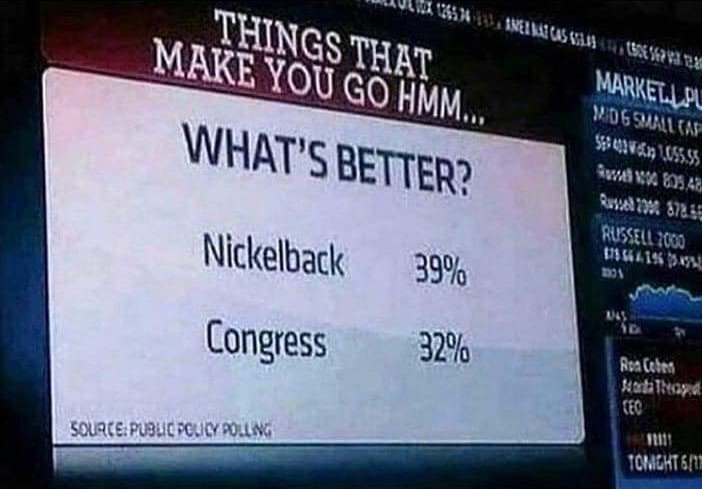
This seems really important. And this seems really important:
If the US had wiped out the competition and then figuratively nuked the Sinaloa cartel, all the cartels would be gone and the border problems might conceivably drop to a small fraction of what we have now. Solving problems, of course, is bad for the federal government and all entrenched bureaucracies. They're going to be there in perpetuity, so there's no incentive to "work themselves out of a job".RTWT. That SiGraybeard guy is one smart cookie.
Thursday, July 5, 2018
By their works shall ye know them
Dr. Keith Briffa has died. He was one of the most important climate scientists, specializing in tree ring climate reconstructions. Here's a snippet from an obituary in the journal The Holocene:
Keith R. Briffa was one of the most influential palaeoclimatologists of the last 30 years. His primary research interests lay in Late-Holocene climate change with a geographical emphasis on northern Eurasia. His greatest impact was in the field of dendroclimatology, a field that he helped to shape. His contributions have been seminal to the development of sound methods for tree-ring analysis and in their proper application to allow the interpretation of climate variability from tree rings. This led to the development of many important records that allow us to understand natural climate variability on timescales from years to millennia and to set recent climatic trends in their historical context.We are counseled to not speak ill of the dead, and so I will merely point out that we've seen Dr. Briffa's work critiqued here on this blog before:
Saturday, October 3, 2009
YAD061
The Science of Global Warming is settled. The next time you hear this, reply "YAD061".
Global Warming was a sensational story in the 1990s:
 Mann based his analysis on bristlecone tree rings, which acted as a proxy for temperatures in times before we had thermometers. You may remember the graph in Al Gore's film "An Inconvenient Truth" - it featured prominently in stories in the press. The message was clear and simple: the climate has started changing suddenly and drastically, it's all our fault for generating industrial amounts of Carbon Dioxide, and we will permanently change the climate if we don't stop Right NOW.
The problem is that Mann's analysis was deeply - fatally - flawed. His computer model had a bug that caused even random data to produce a hockey stick shape. His data set was one clearly marked as inappropriate for use as a temperature proxy, but he used it anyway. When asked for his computer code and data, he refused. Ultimately the truth did come out, which is why you don't hear about "Global Warming" or "Hockey Sticks" any more.
None of this is news for long term readers - my introduction to the topic is here.
This has put the scientists advocating for global warming in an odd position - they have been looking for new sources of temperature proxy records that show (at least in broad brush strokes) the same thing that Mann's study "showed". Recently, a fellow named Briffa published a study of Siberian tree ring cores from the Yamal peninsula that showed this same temperature curve. Well done, Briffa!
Except not so fast. Almost as soon as it was published, it started unraveling. There are now so many real scientists (not to mention intelligent laymen) skeptical of the theory of man-made global warming that many, many people started sifting through the report's data and methodology. As the Linux community likes to say about Open Source software quality, "Many eyeballs make bugs shallow."
The first problem turns out to be nothing short of astonishing. Briffa used cores from only ten trees. Ten.
The second is more subtle, but a picture is worth a thousand words. Of the ten cores, how many show variations more than what is obviously random? One.
 That is tree #YAD061. Seems like an outlier, that should be discarded from the analysis, right? That's not what Bifra did. Keeping it in, the average of the group was raised a little. Just a little, but enough.
Remember, the whole "Climate is increasing catastrophically" discussion revolves around just a couple of degrees increase over a century. YAD061 varied from the group average by eightstandard deviations, which was enough to get that sudden, couple of degree rise for the group. (Look at the line highlighted in yellow).
We have a multi-trillion dollar proposed restructuring of society, based on tree #YAD061.
Back in the Dark Ages, when I was a wee lad at State U, I had to learn Ockham's Razor: entia non sunt multiplicanda praeter necessitatem* (yes, we had to learn it in Latin - this was history of science):
So let's think about this tree, YAD061. Maybe it sees massive global warming - 8 degrees in 70 years - when none of the others do. Maybe. Is there a simpler explanation, that doesn't require us to explain why the other 9 didn't see warming?
Yes there is, and you have each seen it with your own eyes:
So, we see a perfectly normal tree experiencing a perfectly normal arborial lifestyle. We see a scientist who uses such a pitifully small number of trees in his sample that YAD061's perfectly ordinary growth pattern throws off the group results, in a way that the scientist can use to justify his old Hockey Stick model.
Who are you going to believe, Dr. Briffa or your lieing eyes?
So the next time you hear those words the science is settled, tell them "Me and YAD061 say it ain't." And then ask them The Question: what's the difference between an invisible, flying, non-corporeal Hockey Stick that breathes heatless fire, and no Hockey Stick at all?
* OK, OK, it's usually translated as "entities should not be multiplied unnecessarily".
UPDATE 21 November 2009 13:42: Considerable background on Yamal at Bishop Hill.
UPDATE 10 December 2009 19:48: Welcome visitors from Newsbusters. I have a background on the science behind global warming here.
UPDATE 19 December 2009 14:39: A slideshow introduction to Global Warming is here.
Global Warming was a sensational story in the 1990s:
For decades the consensus view was that earth was very warm during the middle ages, got cold around the 17th century, and has been steadily warming since, to a level today probably a bit short of where we were in the Middle Ages. This was all flipped on its head by Michael Mann, who used tree ring studies to “prove” that the Medieval warm period, despite anecdotal evidence in the historic record (e.g. the name of Greenland) never existed, and that temperatures over the last 1000 years have been remarkably stable, shooting up only in the last 50 years to 1998 which he said was likely the hottest year of the last 1000 years. This is called the hockey stick analysis, for the shape of the curve.
Mann based his analysis on bristlecone tree rings, which acted as a proxy for temperatures in times before we had thermometers. You may remember the graph in Al Gore's film "An Inconvenient Truth" - it featured prominently in stories in the press. The message was clear and simple: the climate has started changing suddenly and drastically, it's all our fault for generating industrial amounts of Carbon Dioxide, and we will permanently change the climate if we don't stop Right NOW.The problem is that Mann's analysis was deeply - fatally - flawed. His computer model had a bug that caused even random data to produce a hockey stick shape. His data set was one clearly marked as inappropriate for use as a temperature proxy, but he used it anyway. When asked for his computer code and data, he refused. Ultimately the truth did come out, which is why you don't hear about "Global Warming" or "Hockey Sticks" any more.
None of this is news for long term readers - my introduction to the topic is here.
This has put the scientists advocating for global warming in an odd position - they have been looking for new sources of temperature proxy records that show (at least in broad brush strokes) the same thing that Mann's study "showed". Recently, a fellow named Briffa published a study of Siberian tree ring cores from the Yamal peninsula that showed this same temperature curve. Well done, Briffa!
Except not so fast. Almost as soon as it was published, it started unraveling. There are now so many real scientists (not to mention intelligent laymen) skeptical of the theory of man-made global warming that many, many people started sifting through the report's data and methodology. As the Linux community likes to say about Open Source software quality, "Many eyeballs make bugs shallow."
The first problem turns out to be nothing short of astonishing. Briffa used cores from only ten trees. Ten.
The second is more subtle, but a picture is worth a thousand words. Of the ten cores, how many show variations more than what is obviously random? One.
 That is tree #YAD061. Seems like an outlier, that should be discarded from the analysis, right? That's not what Bifra did. Keeping it in, the average of the group was raised a little. Just a little, but enough.
Remember, the whole "Climate is increasing catastrophically" discussion revolves around just a couple of degrees increase over a century. YAD061 varied from the group average by eightstandard deviations, which was enough to get that sudden, couple of degree rise for the group. (Look at the line highlighted in yellow).
We have a multi-trillion dollar proposed restructuring of society, based on tree #YAD061.
Back in the Dark Ages, when I was a wee lad at State U, I had to learn Ockham's Razor: entia non sunt multiplicanda praeter necessitatem* (yes, we had to learn it in Latin - this was history of science):
The simplest explanation is the best explanation.Carl Sagan's story about an invisible, non-corporeal, flying dragon that spits heatless fire is an accessible demonstration of Ockham's Razor. Sure, a dragon like that could exist, but that's not where the Smart Money bets. The Smart Money bets on "the dragon doesn't exist", which explains the situation just as well, without introducing a lot of added, unproven hypotheses.
So let's think about this tree, YAD061. Maybe it sees massive global warming - 8 degrees in 70 years - when none of the others do. Maybe. Is there a simpler explanation, that doesn't require us to explain why the other 9 didn't see warming?
Yes there is, and you have each seen it with your own eyes:
YAD061 looks very much like a tree that grew up in the shade of its elders, and therefore grew slowly, until age or ice-storms or insects removed the elders and the shade. Then, with sunshine and the rotting remains of its elders to feed it, the tree could take off.Click through to RTWT.Tree rings are imperfect proxies for temperature. Things other than warmth can cause trees to grow faster, and things other than cold can cause them to grow more slowly. Duh.
I have seen growth patterns much like YAD061 in the rings of many stumps in New Hampshire, and not once have I thought it showed a sign of global warming, or of increased levels of CO2 in the air. Rather the cause is far more simple: A childhood in the under-story, followed by a tree’s “day in the sun.”
Dr. Briffa should spend less time gazing at computer screens, and actually get out and associate with trees more.
So, we see a perfectly normal tree experiencing a perfectly normal arborial lifestyle. We see a scientist who uses such a pitifully small number of trees in his sample that YAD061's perfectly ordinary growth pattern throws off the group results, in a way that the scientist can use to justify his old Hockey Stick model.
Who are you going to believe, Dr. Briffa or your lieing eyes?
So the next time you hear those words the science is settled, tell them "Me and YAD061 say it ain't." And then ask them The Question: what's the difference between an invisible, flying, non-corporeal Hockey Stick that breathes heatless fire, and no Hockey Stick at all?
* OK, OK, it's usually translated as "entities should not be multiplied unnecessarily".
UPDATE 21 November 2009 13:42: Considerable background on Yamal at Bishop Hill.
UPDATE 10 December 2009 19:48: Welcome visitors from Newsbusters. I have a background on the science behind global warming here.
UPDATE 19 December 2009 14:39: A slideshow introduction to Global Warming is here.
James Woods: My Agent dropped me because of my politics
Another example of the closing of the Public Square:
Kaplan also represents Wynona Ryder and Kristin Stewart. It's the 5th of July and I'm feeling patriotic, and so I will not go to a movie staring either of those actresses. Because Ken Kaplan logic.
This Cold Civil War is misnamed, just as the American Civil War was misnamed. A civil war is a conflict between two factions, each of whom wants supremacy over the whole. The southern states never wanted to take over the northern ones, they just wanted to go their own way and let bygones be bygones. The northern states waged a war of conquest over the south.
We see this same thing today in the cultural and intellectual spheres. Many people want to be able to speak their own mind, one of many in this e pluribus unum. The other side is waging a cultural war of conquest over the first group.
 Giordano Bruno was burned in the public square in Rome in 1600. He was a heretic - actually a goofball who was spoiling for martyrdom - but the point of his auto da fe was not the stated "last try to save his soul" or even the more plausible removal of an annoying heretic. Rather, it was to make an example for everyone else. Don't do what he did or this might happen to you too.
The best argument that Progressivism is a religion is that it practices inquisitions.
James Woods is saying he has been dropped by his talent agent.
The news was first revealed by the Emmy award winning actor himself on Twitter, who shared an email he received from his talent agent, Ken Kaplan.
"It's the 4th of July and I'm feeling patriotic. I don't want to represent you anymore. I mean I could go on a rant but you know what I'd say," said Kaplan, who Woods described as a "political liberal"Notice the smug tone: It's the 4th of July and I'm feeling patriotic. Okay, then.
Kaplan also represents Wynona Ryder and Kristin Stewart. It's the 5th of July and I'm feeling patriotic, and so I will not go to a movie staring either of those actresses. Because Ken Kaplan logic.
This Cold Civil War is misnamed, just as the American Civil War was misnamed. A civil war is a conflict between two factions, each of whom wants supremacy over the whole. The southern states never wanted to take over the northern ones, they just wanted to go their own way and let bygones be bygones. The northern states waged a war of conquest over the south.
We see this same thing today in the cultural and intellectual spheres. Many people want to be able to speak their own mind, one of many in this e pluribus unum. The other side is waging a cultural war of conquest over the first group.

The best argument that Progressivism is a religion is that it practices inquisitions.
Tuesday, July 3, 2018
Get ready to celebrate the 4th American Republic
I explain it at (ahem) typically Borepatchian length here. Or the TL;DR version:
Not everyone likes the 4th of July. pic.twitter.com/0uJsw18geB— Voluntary Joe (@NoCupsOrLiberty) July 2, 2018
Happy Birthday to the Queen Of The World
My lovely bride is celebrating a birthday today. If all y'all want to shoot off some fireworks to celebrate, that would be fine.
Monday, July 2, 2018
Has anyone ever heard of these?
They have some slick marketing, but that doesn't mean that the thing is very good. If it is, then this seems like a pretty handy thing to have.
Here's there web site.
Sunday, July 1, 2018
Fourth of July Classical Music
This is a post I put up a long time ago, but which captures the sense of classical music for Independence Day pretty well.
--------------------------
Canons and Cannons
[Originally posted June 26, 2011]
Row, row, row your boat ...
Every American child knows this song by heart. Technically, it's called a "round", where different groups start singing the same things at different times. It's simple enough to get large groups of children to do it at school concerts - and well done! Having been to my share of school concerts (as both performer and listener), this is A Very Good Thing Indeed for teaching our children the basics of music. It's a very old music form, dating from the High Middle Ages. Keep the Dream alive, everyone!
But what happens if you complicate things just a bit? Say, by adding an extra (and new) melodic theme to the plain, old, boring Round? You get this:
It's called a "Canon", and Johan Christoph Pachelbel created what is undoubtedly the most famous version, composed in the 17th Century. Surprisingly, it was lost, and only re-discovered after World War I. I say "surprisingly" because this piece is hugely popular today. You've probably heard it.
But "Canon" is not the same as "Cannon", which involve not a chamber quartet, but black powder, but may involve a repeated theme (shelling the enemy). It took until the 19th Century and Tchaikovsky to write a piece for orchestra and Field Artillery, but this is a doozy. It's another piece that you've almost certainly heard before, the 1812 Overture, written to celebrate the defeat by the Russian Empire of Napoleon's Grand Armeé in 1812. Literally, it was scored for orchestra and field artillery. In other words, cannons.
And so, a single character makes a difference, but you'll get great music whichever way you like to spell canon/cannon. I kind of think that my High School music teachers would be appalled reading this, but it's true.
Oh, and for a very politically incorrect and a totally awesome version of Earth Shattering Kaboomdone to the 1812 Overture, here's nuclear detonations to replace the puny 105 mm cannons.
--------------------------
Canons and Cannons
[Originally posted June 26, 2011]
Row, row, row your boat ...
Every American child knows this song by heart. Technically, it's called a "round", where different groups start singing the same things at different times. It's simple enough to get large groups of children to do it at school concerts - and well done! Having been to my share of school concerts (as both performer and listener), this is A Very Good Thing Indeed for teaching our children the basics of music. It's a very old music form, dating from the High Middle Ages. Keep the Dream alive, everyone!
But what happens if you complicate things just a bit? Say, by adding an extra (and new) melodic theme to the plain, old, boring Round? You get this:
It's called a "Canon", and Johan Christoph Pachelbel created what is undoubtedly the most famous version, composed in the 17th Century. Surprisingly, it was lost, and only re-discovered after World War I. I say "surprisingly" because this piece is hugely popular today. You've probably heard it.
But "Canon" is not the same as "Cannon", which involve not a chamber quartet, but black powder, but may involve a repeated theme (shelling the enemy). It took until the 19th Century and Tchaikovsky to write a piece for orchestra and Field Artillery, but this is a doozy. It's another piece that you've almost certainly heard before, the 1812 Overture, written to celebrate the defeat by the Russian Empire of Napoleon's Grand Armeé in 1812. Literally, it was scored for orchestra and field artillery. In other words, cannons.
And so, a single character makes a difference, but you'll get great music whichever way you like to spell canon/cannon. I kind of think that my High School music teachers would be appalled reading this, but it's true.
Oh, and for a very politically incorrect and a totally awesome version of Earth Shattering Kaboomdone to the 1812 Overture, here's nuclear detonations to replace the puny 105 mm cannons.
Smoke on the Water - A Brigid Guest Post

They showed up on the lake one night, visible in the morning, silent in the mist, their shapes nothing at all like what we'd seen before on this small body of water. A few miles away was a large and swiftly flowing river, bringing with it goods from afar. But this little lake was what we, as children, knew. The water had seen canoes, and the occasional raft kids made out of a sheet of plywood and inner tubes, but these little paddle wheel boats were something new.
Dad, of course, wants to go for a ride on one, there at that park at the end of our block where he ran three miles every day after work. I didn’t want to go but I loved my Dad. He and Mom adopted my brother and me late in life and he went out of his way to make life normal, now that Mom had cancer.
So I went with him, like most teenagers, secretly hoping that invisibility was an option but it was not to be. It was Fall, wood smoke from burning leaves drifts out over the little man-made lake in the city park, as people took advantage of the day to be out on the bike paths and walking trails. To make matters worse, he was waving at EVERYONE including other kids my age (invisibility now!) I pretended to be looking up at the birds in the trees, hoping the kids wouldn't notice me, but they did and pointed (forget invisibility, let's go for obliterating lightning bolt). The ride couldn't end soon enough for me.

Had I been acting less like a teenager I would have noticed the stillness of the water before us, our legs propelling us forward as if in flight. I would have noticed how people reacted to my father, the love, and respect he got even as he gave it out. I would have noticed how he looked with an owners eye upon the water passing behind us like spent memory, the peace of the water ahead, at the simple of joy of muscle and motion powering past those things that weighed us down, disappearing in the joy of a simple evening with his child, like smoke on the water.
We were both quiet on the walk home, me because I wanted to be anywhere else, Dad for reasons I didn't understand quite yet. When we got back to the house, Mom was in bed, tears on her face. I'd not seen her cry before and I don't think she expected me to, our arriving home early. The tears encompassed more than pity or pain but rather that inarticulate recognition and despair of that cancer that blazed onto her inescapable earth, its fire, her ashes. I closed the door as he sat down next to her, the whisper of my bare feet on the floor, the only sound I could make
Years passed; the paddle boats disappeared as quietly as they came, with no mention of their passing.

Now, a lifetime later, I am the only family member remaining. As I leave to run an errand I realize that little has changed, but for me. Dad is the same man he was when I was a teen and so embarrassed to hang out with him, just as his home is the same, but for the ghosts that remain.
But I have changed, as I realize that his wishing to watch closely and guide, was not based on control. Rather, it was his realizing that I was still light in the burden of the years, not yet possessing the weight of the wisdom that keeps one surefooted on an inescapable path. It was pushing me past the mundane and the limiting, if only briefly, out of that shelter we make for ourselves in times of self-doubt or danger, hiding underneath it as if it's some armor we don without knowing the full extent of what it's protecting us from.
It was his simply wanting me to know joy, while he spent more time with me, even as time ticked its final moments for his first great love.

As I enter the house and he wakes, I ask him if he wants to go for a drive. He does, but we don't go our usual route. We drive on down to the lake where the paddle boats were docked long ago, walking carefully, he with his cane, down to a bench where we can see the water.
I look at him and say, “do you remember those paddle boats?” and he hugs me and we laugh. From the trees the chirps of birds erupt into music, the steady staccato of their sound ticking down the hours of one more precious evening with Dad.
Saturday, June 30, 2018
Heh, the remake
— Sal the Agorist (@SallyMayweather) June 30, 2018
This meme is hilarious, and this one is even funnier than the last one.
The Charlie Daniels Band - In America
The strength of America is not in Washington, D.C., It's in our people, it's on the farms, in the factories. It's the people out here that make this country work. The truck drivers, the farmers. And these people, that's what they were, and I just felt like if you want to go to war, let me take some of these guys with me. Go lay your hand on a Pittsburgh Steelers fan, and you're gonna find out what American anger is, because it's the kind of people they are.- Charlie Daniels
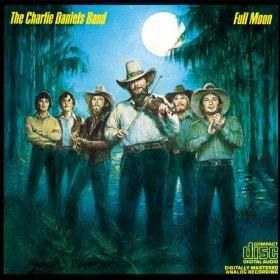
What's old is new again, but in a new way. Charlie Daniels recorded this song in 1980, during the height (depth?) of Jimmy Carter's "malaise". It was a song of hope and confidence in the midst of internal dissension following Watergate, a second oil shock, and the Iranian hostage crisis. Interestingly, while it did well on the Billboard Country chart (rising to #13), it did even better on the Billboard Hot 100 (hitting #11).
It made a second appearance two decades later, in the months after 9/11 when this video was released and the quote at the top of this post was published. Repurposed in a new time and under new circumstances, but still singing about hope and confidence.
The last decade has seen stagnation for much of the country, and an aggressive exercising of centralized power from an increasingly imperial Washington, DC. For much of the country, this has been a very real malaise of declining incomes, increasing taxes, and reduced freedom. But what's old is new again, once again repurposed in a new time with different circumstances, but still singing hope and confidence.
Next week is Independence Day, the first in quite a while where I begin to hope for increased independence from an Imperial Washington DC. There's a long way to go on this, but I'm beginning to get a little confidence.
In America (Songwriters: Charlie Daniels, Tom Crain, Taz DiGregorio, Fred Edwards, James W. Marshall, Charles Hayward):
Well the eagle's been flyin' slow
And the flag's been flyin' low
And a lot of people sayin' that America's fixin' to fall
Well speakin' just for me
And some people from Tennessee
We've got a thing or two to tell you all
This lady may have stumbled
But she ain't never fell
And if the Russians don't believe that
They can all go straight to hell
We're gonna put her feet back
On the path of righteousness and then
God bless America again
And you never did think
That it ever would happen again (In America, did you?)
You never did think
That we'd ever get together again
(We damn sure fooled you)
Yeah, we're walkin' real proud
And we're talkin' real loud again (In America)
You never did think
That it ever would happen again
From The Sound up in Long Island
Out to San Francisco Bay
And everything that's in between them is our own
And we may have done a little bit
Of fightin' amongst ourselves
But you outside people best leave us alone
'Cause we'll all stick together
And you can take that to the bank
That's the cowboys and the hippies
And the rebels and the yanks
You just go and lay your hand
On a Pittsburgh Steelers' fan
And I think you're gonna finally understand
And you never did think
That it ever would happen again (In America, did you?)
You never did think
That we'd ever get together again
(We damn sure fooled you)
Yeah, we're walkin' real proud
And we're talkin' real loud again (In America)
You never did think
That it ever would happen again
[Instrumental]
And you never did think
That it ever would happen again (In America, did you?)
You never did think
That we'd ever get together again
(We damn sure fooled you)
Yeah, we're walkin' real proud
And we're talkin' real loud again (In America)
You never did think
That it ever would happen again
Bootnote: This was a great album, and the other hit single from it has been featured here before.
Subscribe to:
Posts (Atom)