Thursday, January 11, 2018

On Sustenance - Home Economics Memory from Brigid

How many of you that visit here remember seeing or taking  home economic classes in school in 70's and early 80's? After that it became gender neutral "bachelor living" where one learned how to make dip out of Velveeta and use Velcro. (I had to figure out Southern biscuits with peppered bacon gravy on my own).

The whole "home economics" idea, which in my day was only for female students, was not intended to make women a slave to the kitchen but rather came about from a change in how women shopped for their family.  Before the 19th century, except for the most privileged of the wealthy, women were producers of household items, including food and clothing, rather than consumers. So the early home economics classes focused on education for purchasing decisions, as well as health and hygiene in the home. What actual knowledge was imparted was often  limited  though, by school budgets and the quality of the teachers.  I have friends of my same age group that learned nothing more than how to make things out of hamburger and cans  Not in my home ec class. We learned to make things the way generations ago did.
I had the grand dame of home economic teachers, Miss Heidenreich. She was in her sixties, never married. She was sparsely thin and about 7 feet tall but perhaps that was just my recollection in 7th grade.  At first, we were all sort of afraid of her, she was so tall, straight and stern, she just loomed at the front of the classroom, there in a grey dress.  But then we watched, at least I did, as she moved as she talked, gathering raw materials of food or cloth, coordinating the efforts.  Then, when she demonstrated the finished product of what she wanted us to do, the look in her sparkling blue eyes was one of not just joy, but quiet triumph.

I recognized a bit of that.  Most of us were lucky in that we were raised by Mom's themselves raised in the 40's and 50's when money was tight and things were made to last. My Mom came through lean times in the Depression, her Dad killed in a logging accident, with no insurance, leaving a widow and three kids to feed. My grandma somehow got my Mom through college, unheard of in that day, wherein Mom got a job that paid enough to put her two younger brothers through, while Grandma worked full time as well.  She and my grandma both then, learned to work with that same efficiency of movement,  that might be considered detached would you not recognize it as simply being the beautiful efficiency of machinery.
My grandmother would not even recognize a grocery store of today and my Mom would be appalled at the quick and cheap clothing made that falls apart within a few months of wear.  She made all of her and my clothes herself, except for jeans and T-shirts, my sweaters hand knitted as well as an assortment of scarves and winter hats.  There was also an assortment of 70's crocheted vests that looked to be more for hanging a houseplant, than for wear, but that was the fashion.  Those clothes did not wear out but were cleaned, pressed and handed down to a younger cousin (except for that one dress that ended up with a bicycle tire track up the back, and no, don't ask).

If an item of wear, needed repair, Mom knew how to do it.  I however wasn't too keen on learning.

You see, I liked to cook, because, I like to eat.  I'd spend hours with my Mom, helping prepare the meal, if only to set the table while I watched her work. To me, cooking was like playing with the chemistry set, how fun to see how things are formed, how ingredients interact and take on whole other forms, and even better if you can eat the results.   But I had no interest in sewing, crocheting or knitting, making decorative pillows or embroidering a tea towel. I'd rather be out in the shop with my Dad or playing with model trains or control line aircraft. To say that I discovered that if you don't FEED your Betsy Wetsy Doll, she doesn't wet, gives you some idea of my mindset with "girl stuff".
I did make a valiant effort to knit a winter neck scarf for my Dad. But that was just because I loved him.  After several months, ripping inferior work out and starting over again, and again, I had a piece only 3 x 5 inches square.  I gave up, knitted the edges together and it became a tube dress for someone's Barbie.

Let's just say I was not too excited about Home Ec. that first year, though I respected my teacher as I was taught to.  I just kept quiet, and sewed my silly pink apron with my name embroidered on the pocket.  I did buttons and hems, though I got a D in "snaps" just because I was obstinate.  I learned how to darn a sock.  I sort of giggled at that, as in my home you said "darn" instead of "damn".  Actually "damn" would have been the more appropriate word to what I did to those socks.

But Miss Heidenreich taught us all of the basics. Unlike other classes, we weren't learning how to make casseroles with soup or 101 ways to use canned Crescent Rolls. The cooking was not anything out of a can, and there were some things we learned to make that were not very popular with us.  What 8th grader wants to make and eat stewed prunes or unseasoned boiled chicken for meat and broth.  What about brownies and pizza? But later, many years later, caring for the elderly, such things came in useful.  I could cook for restricted diets, I could make bread, I could make a white sauce instead of an expensive can of cream soup. I could make a variety of economical dishes with just a bit of meat or eggs or beans for protein.  I could make a cake missing key ingredients, butter, milk or eggs. (but not all three, that is known as a hockey puck).
Miss Heidenreicht would watch constantly, bright but insulate, letting us make our way, only stepping in when flames were involved, or there was a need to staunch blood.  But she was not popular with all the students as she was a stern task-masker, expecting you to work hard, to listen and to apply what she had taught you. She taught like my parents taught, but not all kids had the benefit of that experience.

She frowned on idleness and those girls that wore jeans to school, instead of neat slacks or dresses.  She dressed plainly, her dresses unadorned but for a bit of lace or a small necklace of pearls, the fabric starched into submission.  But she was not unkind, not even batting an eye when one jean-clad girl came in with green hair from a "let's add some ash blond highlights at home" disaster, only offering her extra praise for her strudel to keep her from crying.  Based on Miss Heidenreich's age, I only understood as an adult, what hardships she may have seen as a  young woman, Depression-era families sometimes starving, only the strong, resourceful and skilled surviving and thriving. It made me think differently of her home economics class, and what I came away from it with.

She was my teacher just that first year, retired and replaced by Mrs. Potter, of whom I have no real memory but for a friendly smile and the "Dante's Nine Circles of Hems".  By Ninth Grade, I'd learned enough, I thought and put in a bid to take Auto Shop instead of Home Ec.  That was met with a resounding slam of a car door.

I made my case, I knew how to make dinner, I needed to know how to change my oil and pack a wheel bearing. I was told I needed to take the "girl" classes. Shop class was only for boys.  I was told I was stubborn, I believe the term "as a mule" was heard (to which I pointed out to the administrators that unlike a horse, a mule is too intelligent to break its leg for glory running in a brief, pointless circle).  I was shot down, though there was one female friend and classmate, now an engineer, like her father, who won out and got to attend the agriculture class where she castrated a calf in a moment which gave me hope for the next generation.
So I dutifully sewed my outfits, made taffy and tarts and finally in the last sprint for independence, opted out of most of my courses, taking them at the local college, going full time in the summer.I wasn't old enough to drive but I made it there by bike and by bus or Dad's trusty steed.  I was indeed the only college freshman in a "training bra" (don't get me started on how that term started, it's not like you train them for tricks or anything "Sit",  Stay!", though getting older, they do know "roll over").

My days of home ec were over.  At the time I was happy for that, yet now, I wish I'd paid more attention, as more skills of prepping and preparing as well as knowledge and the economies of the kitchen would have served me well as I entered my 20's and 30's.

This Sunday morning, I'll be lighting the fire of a 70-year-old stove that's DIY maintenance and upkeep. The house will be cold, extra blankets used at night instead of bumping up the heat.  As the stove puts heat into the back of the house, activity picks up as if propelled by the increasing warmth. After reflection, prayer and thanks, there will be a plumbing project to finish, bread to be baked, and somewhere, a sock or two that needs damning.  Outside, branches scrape and rasp against the house, the frost on the window a portent to how cold it can be for the unprepared, as winter light lay upon the ground like a pale scrap of starched grey cloth.
But like many things in homes I've lived in before, I could afford to pay to have someone do all of this, buy all this. But I choose not to. I and my family would rather do more for ourselves, with minimal help from others, putting our money into tangibles which will keep us housed and safe, where days of struggle to survive, of sparse broken meals, do not threaten.  I  find such great satisfaction in saying "I made this"  or "I saved this much",  making something out of nothing, building not a house, but a home with pieces of the past, carefully mended, and always treasured
I look at all the blogs out there, many on my sidebar, of men and women, resourceful people, who have learned how to grow, store, can and prepare healthy meals for themselves or their family; manage land, tend a farm, some with help of other family members, some completely on their own, even as they teach these skills to others. Their skills aren't limited to the kitchen but include the field and the workbench. I have learned a lot from them, to add to what skills I grew up with.
Taking care of your family, your needs and safety, with no handouts and your own resources and skills is something to be admired.  All are things I wish were still stressed in school now.  Those that learn themselves, the men and women that do so and then pass on that knowledge to others, give me hope for the future.  I do think Miss Heidenreich would be proud.

Wednesday, January 10, 2018

Tuesday, January 9, 2018

Driving Mr. Barkley - A Brigid Guest Post

For those of you who have read The Book of Barkley, you are familiar with a rift on this story.  Barkley was my best friend for many years, until he introduced me to my husband, soon to be my new best friend, and then Partner in Grime for life. But much of the story of Barkley was in the many drives we had between Indianapolis and Chicago where Partner had a home which I visited until we were wed and I moved there.

For you see, for about 4 years I had a commute of about 4 hours each way every Monday morning and Thursday night between Indianapolis and Chicago. I worked four 10 hour shifts a week so it made for some LONG days.  I wanted to move to Chicago permanently to join my fiance, soon to be husband, but  I had a career and a townhome in Indiana.  My large home had sold and I was just renting the townhome, but transferring up to Chicago job-wise wasn't an option as there were no openings at my pay grade (I'm sort of like "Director" if we were NCIS) and I was too close to retirement to take a pay cut to be closer to home.  With people retiring, I knew there'd be an opening if I was just patient.

Fortunately, I had a big, sturdy American made barge of a vehicle to haul Barkley, and later Abby when we rescued her, back and forth.
Sometimes there's miscellaneous cargo of the squirrel, and not so squirrely, in the back..
Often it was dark when I left Monday morning, which was actually my favorite time to head out. It gave me another night "home"  and I missed the worst of the traffic.  At 3 a.m. the roads were mostly vacant, the sky nothing more than the thin deceptive perception of safety.
So I always made sure the truck was full of gas and the road ahead clear and then I'd get Barkley in his harness and ready to go.
Madam - I'll just wait here on my dog bed until you bring the car around

Uh, Barkley, the LITTLE grey bed is your dog bed.

Soon, the night succumbed to day, and everything quickened.  The traffic and my pulse would quicken, as the light spread over the road like water. Soon it's day and from the vantage point of a vehicle that sits up high, I could see all sorts of things.

It's fun to look back on some of the trips, "bed hair" and all. If we were moving I'd just hold up the little point and shoot camera while I kept a hand and eyes on the road and snap back at Barkley.  Some of those were hilarious.  And if we were slowed or stopped in traffic sometimes we could get a shot of an interesting vehicle.

Diary of a Drive with Mom
I'm in the truck with Mom!  I'm in the truck with Mom! I'm in the truck with Mom!
Ninety Nine Boxes of Treats on the Wall, Ninety Nine Boxes of Treats. . .
Can't you change the channel?  It's the "Corn and Cow Show" again and I've seen this episode.
Does she even notice I'm back here, It's been like a YEAR since I got a treat.
Where did he go?
I am SOOOO bored. 
Mom - I think I'm getting car sick.  Can we stop again.  Perhaps at a burger place? 
ZZZZZZZ

Wake up Barkley -there's an interesting vehicle!~

The doggie gaze equivalent of "Mom - What the. . . .?"

This truck probably cost more than some of the houses just west of here.  You could have performed surgery off most of its surfaces.  The driver apparently very proud of it, wants you to know who is driving it by the giant dayglo orange name across the back window.   At first, I thought his name was "Tarzan".  Either I'm getting nearsighted or I REALLY need to clean these windows..
Driving through the freeway stretch of Gary (which is normally done at twice the speed of sound, the cops not even wanting to pull anyone over on that particular stretch), I saw what appeared to be the Batmobile.  At least the Batmobile Gary style.
The young man driving it was probably the best driver on the road, in and out of lanes discretely and expertly, yet not being stupid (unlike Vlad the Impala that tried to kill me several times).  I'm not sure what that hood ornament is.

I actually did see on a stretch of the road further south of here the real Batmobile, or at least a reproduction thereof.   When I arrived in Indy and met Tam and Roberta X for a meal I tried to tell them about that experience.

Me.  "I waved, he waved.  But he didn't signal when he was changing lanes." (Seriously, I about ZAP! POW! BAM!'d his back bumper when he suddenly cut in front of  me.)

Friend #1: "The Bat Signal is only for use in emergencies."

Friend #2: "People signal Batman; Batman doesn't signal people.

On this same stretch of road, another trip, there was a vehicle for which I didn't get a picture as the traffic was too heavy to be distracted by a camera. There were a couple extra antennas on it. One looked like it was Elmer-Glued on. It looked too new to be a Grand Marquis de Sade, more likely a later model Crown Vic, but the shape and color were such that hundreds of drivers in the past had likely slowed down in its presence thinking it was an unmarked cop car.

The driver, as well, was all in black, with a black baseball type hat, earpiece in his ear, muscled arms clenched on the wheel. In the back window, another black ball cap, this one with 3 letters indicating a squirrel type employer. At this point I started to grin, knowing a bit about such headwear. I can tell you one does NOT put them in the back window of their car, although you can buy fakey looking souvenir ones on the internet. They're worn for a specific purpose and it usually involves a search warrant.
But what our Mall Ninja failed to realize, that despite the old police shaped spiffy car with the extra antenna or two, the clothing, the hat he bought on the net, and "the look", one thing just screamed "mall ninja!"

The yellow triangle in the window that said "Baby on Board".

I did get a picture of this. . .
Camouflage submarine?

Even with a state that's about as hilly as Saskatchewan, I still don't get more than 18 miles to the gallon.  But I bet I get more than this guy, driving a truck that appears to be made out of four separate vehicles with a camper that appears to be attached with Velcro. I kept my distance in case the wind picked up.
And, in an off the freeway foray to get gas in a safe area,  I saw this. Fifteen miles per gallon in hot pink.   I'd tint my windows too if my SUV was that color.
Then - this classic, another pink vehicle, a distinct shade of light pink  I recognized. It's a Mary Kay car I thought. You know, one of those new and shiny fancy cars with the sticker on the back "I Won It, Ask Me How - Mary Kay."

But as we got closer I could see it was a very beat up Volvo, with the rust marks to show its age. But it was pink. Pink, painted with a brush.

With a fresh and flawless Mary Kay "I Won It Ask me How" sticker in the back window.

The man driving it looked like the guy from the Red Green show and the car was full of junk, likely a run from the farm to the junkyard or dump.
There were quite a few drives though, where the cars were mundane, the landscape clouded with shadow and the camera stayed still.  Such were the mornings I looked at the light coming up in the sky, shooting upward in the darkness like the upward floating tresses of a drowned maiden sleeping in a motionless sea, I wish I could capture that.  I also knew that the cheap little camera in the vehicle, in motion, never captured it, that moment or the words in my head and I go back to my coffee and the thump of the miles.

I kept an eye on the weather as well, high winds not being a big concern in my vehicle, but definitely affecting other drivers I'd just as soon stay out of the way off.  I kept the radio tuned to the local alerts, and there is always the weather cow, one of the first pit stops on the journey. It's not the cheapest gas around, but the place was frequented by most of the local LEO's.  It was more country than city and the bathrooms were spotless (unlike the ones up by Crown Point where I think they lock the gas station bathrooms to keep people from sneaking in and cleaning them). 
 Weather cow says it's windy with a chance of flurries
 Weather cow says it's sunny.
Weather cow says it's raining.
Look, Mom !  A trailer full of tractors!

Barkley could sometimes be a pest, with stops for walks, and begging for treats and Barking at the Dart Trucks (I think he thought the Dart guy on the back of the truck looked like the UPS man) But I so I missed him after he went to the Bridge, driving that big Chevy Subdivision of a vehicle, logging miles between light and dark, the clock on the dash only changing the minutes, it seems, when I look away, the slight of hand of time that shapes us all.

So glad we've arrived at the townhouse so I can do something more exciting while you go to work!

Thank you, Barkley - for all the good trips and the good memories and for watching over Abby Lab and me while we made that last year of drives without you. We miss you every day.  When I get on a plane going to the UK and see someone in First Class reading your book, I just smile.  Your story continues to warm people the world over, and for that I am glad.


Linux: still runs on a 486 computer

While this seems like a bit of a goofy project, this demonstrates why Linux is so popular in the server world.  Modern Linux runs on ancient computers:
What is the oldest x86 processor that is still supported by a modern Linux kernel in present time?
I asked the above quiz question during the Geekcamp tech conference in Nov 2017 during my emcee role. The theoretical answer as you can glean from the title of this post is the 486 which was first released in 1989.
He got a modern operating system running on a 25 year old (!) computer.  This is all good fun, of course, but there are some really important take aways:

1. Linux has exceptional support for old hardware.  One of the reasons people have used it is that instead of throwing away old Windows computers, they can turn them into servers.

2. The operating system is very, very stable.  You can have some confidence turning your old hardware into servers because very little in the OS is hardware dependent and so it just keeps running.

All in all, this is a pretty interesting article (although it's very linux geeky).

In which I recommended a bad product

Last year ASM826 and I did a series of posts about backing up your data.  This is a critical (and often overlooked) security principle, and is important enough that there's a permanent link on the sidebar to the series.  In one of the posts (How to pick a storage device), I recommended a product: the Western Digital MyCloud storage device.

Well, oops:
Today, yet another security blunder becomes publicized, and it is really bad. You see, many Western Digital My Cloud NAS drives have a hardcoded backdoor, meaning anyone can access them -- your files could be at risk. It isn't even hard to take advantage of it -- the username is "mydlinkBRionyg" and the password is "abc12345cba" (without quotes). To make matters worse, it was disclosed to Western Digital six months ago and the company apparently did nothing until November 2017.
Gah.  I'll spare you the gory details other than to say that Western Digital has clearly been asleep at the security switch multiple times.  This is a very bad vulnerability, it's one that can be exploited when you take your browser to a site hosting malicious javascript (i.e. pretty much anywhere), and it gives a Bad Guy complete access to all your data.

I sure as heck didn't know about this when I recommended the product.  Here is the list of products that have this bug:
  • MyCloud
  • MyCloudMirror
  • My Cloud Gen 2
  • My Cloud PR2100
  • My Cloud PR4100
  • My Cloud EX2 Ultra
  • My Cloud EX2
  • My Cloud EX4
  • My Cloud EX2100
  • My Cloud EX4100
  • My Cloud DL2100
  • My Cloud DL4100
If you have any of these, you can get updated firmware via this page.

As to a recommended storage product, Western Digital is not anything that I can suggest you look into.  The bug never should have been in the code, but they were sloppy.  They should have fixed it months earlier than they did, but they seemingly didn't care.  Not a company I want to trust with my data.

Your mileage may vary, void where prohibited, do not remove tag under penalty of law.

The key to the Bastille

It doesn't hang in the Bastille, which was torn down by a Parisian mob in 1789.  It hangs today in Mount Vernon, a gift from the Marquis de Lafayette to his friend and mentor, George Washington.  Washington stood against tyranny, as did Lafayette.

Yesterday, a Federal Judge dismissed charges against Cliven Bundy, "with prejudice" - meaning that the Department of Justice cannot refile the charges.  It seems that the prosecutors in the case hid evidence of governmental wrongdoing from Bundy's lawyers.

In a word, tyranny.  And to the Court's credit, tyranny that the Court ruled will not stand.  Perhaps there is hope for this Republic yet.  As Adam Smith wrote, there's a lot of ruin in a country.

Here is the story of the tyranny, from a post four years ago.  The wheels of Justice grind slowly.

--------------------------------------------------

The Bureau of Land Management's Bastille

Image via La Wik
July 1789 was a tumultuous time in Paris.  Discontent with the Royal regime had been building for decades and had reached the point where the King was forced to call a Constitutional Assembly.  But as the nobles, clergy, and bourgeoisie harangued each other, the people of Paris were growing increasingly restive.

And by "restive" I mean that mobs were spontaneously forming.  The most important of these was the mob that stormed and sacked the notorious Bastille prison on July 14.  The Bastille had an evil reputation and was seen by essentially everyone - educated and uneducated alike - as a symbol of a despotic and tyrannical government.  And so the mob broke the doors down and sacked it.  They paraded the head of its commander on a pike through the streets.

Image via La Wik
What is odd is that the perception was very different from the reality.  The Bastille had almost no prisoners housed in it.  Conditions for the prisoners were actually fairly comfortable, and fine dining among its noble prisoners (most of those incarcerated there) was the norm.  But the air was filled with discontent, and so wildly exaggerated books like Simon-Nicholas Linguet's Memories of the Bastille painted a lurid (if untrue) portrait of the place.  And so it was torn down.  Today's Place de la Concorde is all that remains of the site.

We have just see the US Government's Bureau of Land Management go through an experience similar to Louis XVI.  What was essentially a mob driven by a long-building sense of grievance stared down the King's Men in Nevada.


A number of people have rightly pointed out that Mr. Bundy is no Saint, and that legally he doesn't have a leg to stand on.  That's quite true.  It also isn't the point that is driving events.

What is driving events is something that would have been well understood by M. Linguet.  Mobs do not spontaneously form out of nothing, and the spark that lights the fire may have very little to do with reality.  His memoir was essentially a work of fiction; it was enormously influential nonetheless because the Government then had laid the groundwork building widespread resentment.

As has ours in this day.

All that remains of the Bastille is the key to its main gates, currently hanging on display at Mt. Vernon (it was a gift to George Washington from the Marquis de Lafayette).  That's all that's left of a feared symbol of Royal power - that and an annual national holiday in France.

Our Government has no idea what they have awakened, any more than Louis XVI had.  So far, it has played out without blood flowing in the streets.  I am pessimistic that this will continue for long.

Monday, January 8, 2018

Glen Campbell - The William Tell Overture

Boy, he sure was a great guitarist (that was actually how he got his start, as a studio musician).


Oh, yeah - and 70 albums recorded, 45 million sold, 4 Grammys in a single year.  One hell of a musician.

So taxing something makes it more affordable?

Huh.  I never knew.

I guess those economics classes back at State U were wasted.  I feel so cheated ...

Global Warming causes snow in the Sahara desert

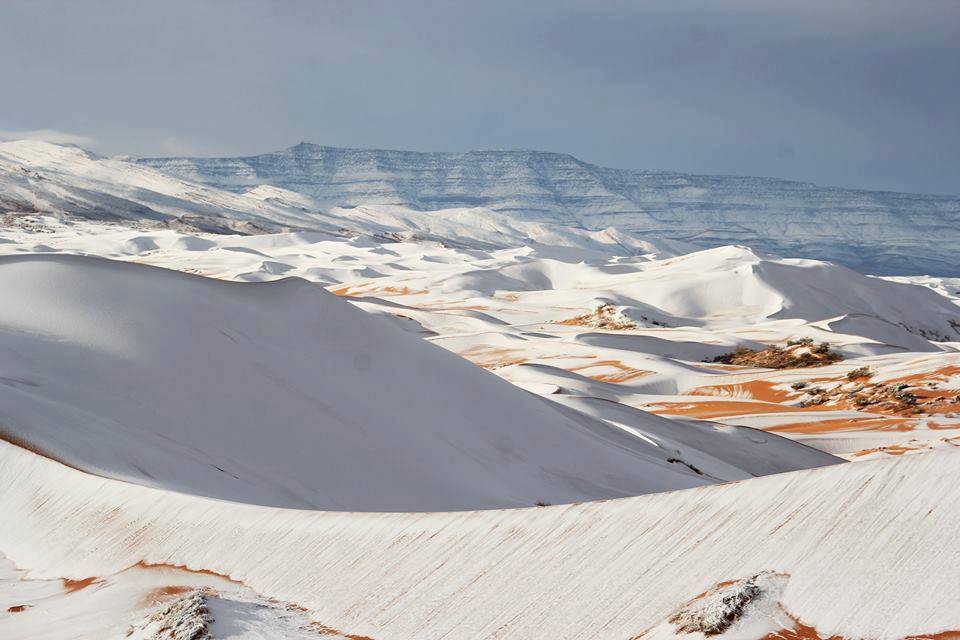
Let's see: record cold over most of North America, and snow in the Sahara desert.  It must all be Global Warming in action:
The snowfall was caused by the large cutoff upper low over western Mediterranean, which also influenced northern Algeria. The snow was visible also in satellite imagery, standing out in the orange desert surface.

At this point, let's all just agree that this debate is not about science, it's about religion.  If there is no scientific evidence that can be presented to falsify the hypothesis, you sure aren't talking about science.

Sunday, January 7, 2018

On Loss - A Brigid Guest Post

This week was difficult - the 26-year-old son of church family dying suddenly, and without warning, a funeral that was packed literally with people into the choir loft, a family inconsolable. Our minister's voice shook with tears waiting to be shed as he delivered a powerful message of hope and strength after that initial stunned announcement to our Saints of Grace.

I have been a position too many times in the past, where I too had to break the news of a tragic death to a family and it took me back there more than once this week.

The place was small and starting to show its age. The town itself was nothing more than one small living plant among an acre of weeds, robbed of vitality by the economy, its young eaten by the big cities. As I draw nearer to this modest, neat farm, I notice all the homes around here empty, grass overgrowing. Two have election signs still withering in the wild lawn, others with some children's toys abandoned in the grass as they left in a hurry, the only witness to their departure, the bitten and fruitless stalks of corn from that summer's drought. I noticed the small things, it's what I was trained to do.
A few hours after daylight, I approached the house, a cluster of pines shouldering the fence, drawing the whole walkway into darkness, while in the distance a dog barked futilely, without enough effort to scare away even a lone redhead. When I first pulled in, there was no movement, no light turning on, just the faint, cold and constant illumination of a cold morning. Then, the small movement of a curtain, someone looking out. They were waiting for me, looking out the front window at the sound of the vehicle.

The people who lived here would look as if they'd been born there, with the home somehow built around them, bright eyes in parchment skin, hands roughened by a lifetime of hard work. They would answer the door, not with deliberation but with patiently unassailable and unflinching weariness, for they likely already knew why I was here. I stepped around a pile of wood at the edge of the driveway, there with a sign "self-service firewood" with a pot to put your money in and take what you needed. This was a home of people that trusted. I did not come for firewood. I had come for something else, to be the confirmation of news that would make any hardship they'd suffered in the past, pale in the light of something much worse.
I would stay only as long as I had to, for there were always questions for which the answers I could not yet give. Questions that waited for me, still needing to be asked. This was never easy. In my heart was a whirl of emotion, tears held in for too long, held in further. I wanted to look them in the eyes and just get it over with. In an effort to compose, I looked into their home, seeing a simple cross on the wall, a black bound book on the table. These were people who likely have a belief that honor and promise and salvation lay between the pages of that book. People that believe the vindication of their will and faith would be more than what I was about to tell them.

I then looked past them, out into the acres of a life. Land that they held on for the sole purpose of leaving it to family, looking into the bright comedy of late Fall that hid laughing beneath the dying green. But my face did not show this. My face showed only it's own pouched darkness beneath the eyes from being awake for 20 hours, mouth held firm as if by doing so I could hold in the words, somehow take them back. But I couldn't

 "I'm sorry for your loss." You hear the words on TV uttered by people like myself, and no matter where it comes from, it sounds trite. It sounds bad when it's uttered without inflection, a formidable silence hanging over the scene. It sounds even worse if the words are uttered for the TV, just before the playful banter of the golf course begins again. Whether you know the person well or not, they deserve your respect, their remembrance more than the words themselves, words that rush out from the earth, gathering around us in a shadowy embrace; words that have not only a touch in the darkness but weight.
It's not always easy, as I have done it myself. Speaking of a person who's living face you've not seen, and whose name you only learned from a blackened piece of plastic and perhaps a dental record, the words don't seem real. The words are hollow and spoken as if from a cue card. It's not what you wish you could say. For that would be words in which you could somehow articulate the encompassing sense of despair and anger; despair at the loss of someone whose remains forever fly upon the tragic and inescapable sky, their ruin. Anger, because in another life, in another time, he or she might have been a neighbor, a lifetime friend.

There are never proper words, words themselves are deceiving. Taken out of context in a journalists reports, a hastily written text or email, without the emotion or the eyes, truth becomes lies and dreams the truth. Words are only that, words. Without the feelings behind them, they are only inky blackness. I can only hope that the inadequacy of these five simple words will confirm our humanity and somehow bestow on the trite repetition, its real meaning. "I'm sorry for your loss". The wrong words, words that should have stayed on a page of a script, hidden from anyone other than their author.

As I bore that burden to that family on that day long ago, I saw it in their eyes, they know this as well, and surprisingly the man reached out to grasp my hand, bearing stoically the fields of their devastation, reaching out to me in mine. It was not a handshake of welcome, for I was not, but it was a handshake that confirmed we were alive, with duties that still must be done. On that day, I was brief as I could be and left them in their silence, the only sound an old retriever in his dog run, pacing on whispering soil, his ears bobbing as he went to and fro, sensing as animals do, that something was irretrievably wrong. There were no words for that either. Grief is a strange beast, never showing quite the same face twice. It burns sometimes like a rapacious cauldron flame, sometimes catches us like a silent, frozen breath. Even as it fades away it stays with us, leaving scars upon us even as the coldness retreats.
I backed slowly out of the driveway, retreating like a glacier, leaving deep ruts in my wake, marks on a life that would be there til time ceased. Around me, farms, barns, fences, where people built and clawed and grew, raising families, doing what they could to hold back the wall of wilderness and death. It was a battle not without cost in life and property, that lust for life that is not lust, nor even movement, but simply that unfettered stability called freedom. Now it simply stands, cornfield skeletons, stark, broken, flowing away as I left. Places that once seemed vastly impenetrable, diminished as the clouds wept, growing smaller and smaller, swallowed up by tears.

I left slowly and as quietly as possible, never looking back, because to do so would be to lose what semblance of control I still had. As I leave, I look out across the way, to a vacant house, in which someone's dreams were foreclosed. We go into life eyes open, running wild. We make it through our teen years, driving like idiots and taking inordinate chances. Still in our 20's we usually don't worry about financial loss, death or even taxes. We vote for the slickest campaign slogan, we scarf down food that's bad for us. We are still young. We have so much time left, the rest of our time, with years ahead, all pretty and shiny and new. We still have dreams; of love and trust and living a wide-open life that others will accept. We don't understand. I didn't at first either, bounding into life and love with a pocket full of primers and a knife large enough for any bad news. There was nothing but being alive, of being in love, of buying that dream of believing in good, even as it left you black and blue.
But with the years comes truth, and soon you know that life isn't always safe, and you take the risks, knowing in the risk that you are truly alive, to do what you are afraid of, to love strongly and free, is to be truly alive. It's better to be afraid than to cease to breathe. Those of you that are young, when you are middle aged, you will understand. For just like love, life is a risk, never a possession. With that risk comes loss, with loss comes understanding; that happiness is more than the embracement of that which possesses the possibilities on which you can establish the structure of your life, it is something within yourself.
I am glad I have lived as long as I have, having found a spot of land and a community where I feel safe, even as tragedy strikes. It embraces us now, as we do it, for many of us who have lived through life and loss share the same resilient and passionate soul, the ability to take some hesitant and half-formed resolve and till and weed and shape it with sweat and tears and occasionally blood, into dense, abundant life. We understand what it meant to live life on one's own terms, on one's own homestead; to take counsel with the great solitude that is a plot of earth, the running of fresh water, the whisper of soil and heaven that proves to some souls to be an irresistible draw. I hope when we are called from this place we will remember it fondly in what remains.

Saturday, January 6, 2018

Man, it's cold

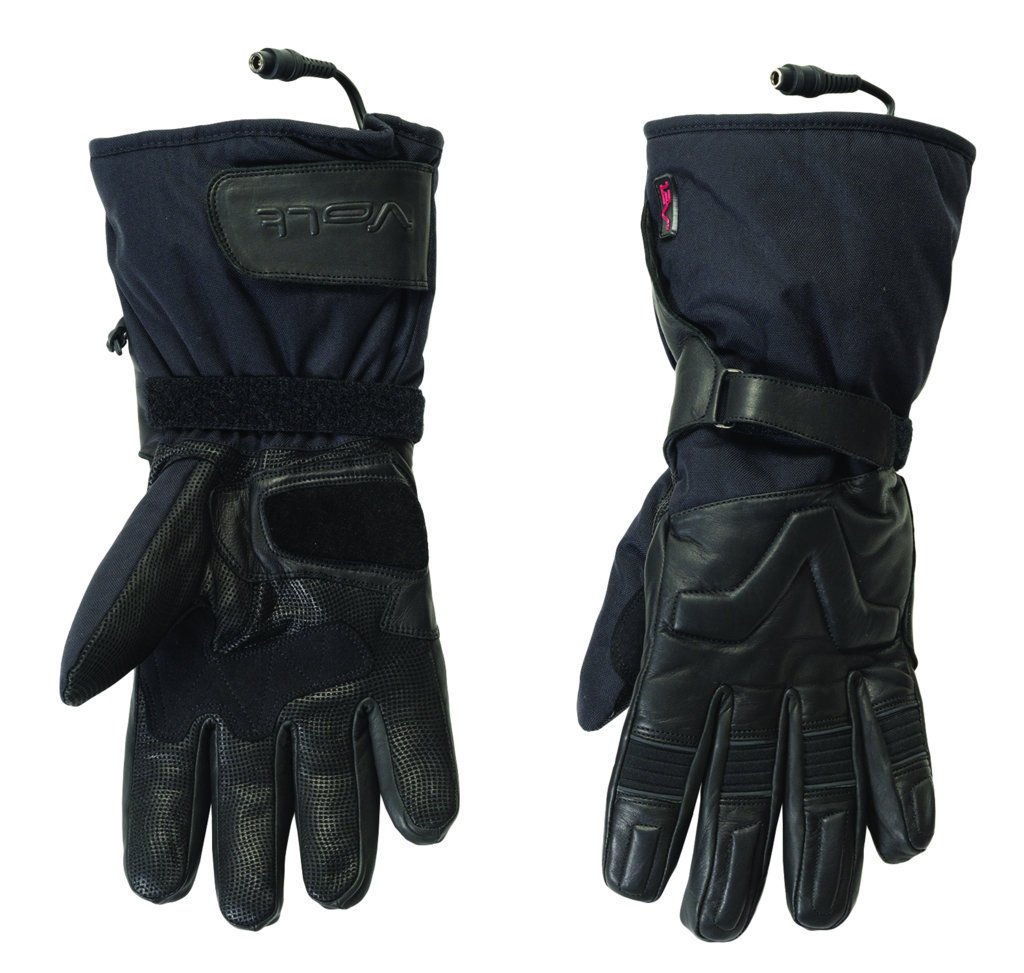
It's so cold that when I take Wolfgang out for his walks I've started wearing these:

Those are my heated motorcycle gloves.  Even without plugging them in they're pretty toasty.  But I wish that Al Gore would just go home - he must be in the area because of all the damn Global Warming we're not getting.

Friday, January 5, 2018

A Public Service Announcement

Folks, it's called a "Nor'easter".  "Bomb Cyclone" is just clickbait.  I grew up in Maine, and we had these all the time.  Yes, it's cold and snowy - it's winter.  This isn't worse that 1978, or 1996.  Saying this is "Climate Change" is idiotic: we've seen this over and over again for as long as people have been keeping records.  Weather, not climate, folks.

You'd expect people to act like they've been here before ...