
Monday, November 6, 2017


Artificial Intelligence: still waiting
AI does poorly at something that every small child excels at: identifying images. Even newborn babies can recognize that a face is a face and a book is not a face. AI algorithms take long long training sessions to get to basic competence, and even then it seems that it's practical to fool them:
And now AI looks like it's doing precisely the same old pattern:
Students at MIT in the US claim they have developed an algorithm for creating 3D objects and pictures that trick image-recognition systems into severely misidentifying them. Think toy turtles labeled rifles, and baseballs as cups of coffee.This has been a problem in my field (computer security) for about as long as I can remember - certainly back into the 1980s, and almost certainly longer. Programmers work to get functionality correct - the program performs as intended when fed normal (i.e. expected) input. Programmers have done poorly anticipating what a Bad Guy might feed the program as input. Instead of a name in a text field, how about a thousand letter A characters? Oops, now the Bad Guy can run code of his choice because the program didn't anticipate this input and then fails in an uncontrolled way.
And now AI looks like it's doing precisely the same old pattern:
The problem is that although neural networks can be taught to be experts at identifying images, having to spoon-feed them millions of examples during training means they don’t generalize particularly well. They tend to be really good at identifying whatever you've shown them previously, and fail at anything in between.
Switch a few pixels here or there, or add a little noise to what is actually an image of, say, a gray tabby cat, and Google's Tensorflow-powered open-source Inception model will think it’s a bowl of guacamole. This is not a hypothetical example: it's something the MIT students, working together as an independent team dubbed LabSix, claim they have achieved.Oops.
“Our work gives an algorithm for reliably constructing targeted 3D physical-world adversarial examples, and our evaluation shows that these 3D adversarial examples work. [It] shows that adversarial examples are a real concern in practical systems,” the team said.
“A fairly direct application of 3D adversarial objects could be designing a T-shirt which lets people rob a store without raising any alarms because they’re classified as a car by the security camera,” they added.Double oops.
The problem is how programs are designed and implemented. And quite frankly, designing a program that can anticipate all possible attacks is probably a fool's errand - the program would be so complicated that it would probably run poorly, if at all.
The moral is to use software as a tool, but always understand that the output can be wonky. This is especially so when someone wants the output to go wonky. A.I. can be a useful tool, but anyone who thinks this will change the world is in for a quite nasty surprise.
Sunday, November 5, 2017

Johann Strauss - Tik Tak Polka op.365
You set your clocks back last night, and so clocks are top of mind today. The Waltz King, Johann Strauss, wrote something for that. It wasn't a waltz, but instead came from his operetta Die Fledermaus (The Bat). It is intentionally upbeat, verging on manic. To maximize sales, many 19th century composers would publish short pieces from their longer works as sheet music. Strauss had six such pieces from Die Fledermaus published this way. It was challenging for an amateur to play simply because of its speed, but this has remained one of Strauss' most popular (non-Waltz) pieces.
Saturday, November 4, 2017

Elvis Otieno - The Kenyan Country Music scene
Kenya is largely rural and the majority of the people are farmers, so perhaps it's not surprising to find that the themes of Country Music resonate there. They resonate so much that there is a huge Country Music scene there. Interestingly, it's not the new "Country Pop", but rather the music from the '70s and '80s - Dolly Parton, Kenny Rogers. Much of this is due to Elvis Otieno, known as "Sir Elvis":
The celebrated musician, who is determined to bring country music to Africa and in particular Kenya says it has not been easy. "Every time we hit the stage, it was always a shock to most locals who couldn't imagine that a Kenyan could do country. That is the reason they love to listen to old-school country from the 1960s, 70s and 80s recorded in Nashville by the likes of Charley Pride and Jim Reeves, Dolly Parton, Kenny Rogers, Don Williams and Skeeter Davis," he told Metropolitan.It seems that Kenyan society is fertile ground for the themes of old school Country Music - God, hard work, family, striving, loss, but never giving up.
Despite being a Kenyan and an African, the story of his early life is straight out of an American country song. He was born in a whistle-stop town on Western Kenya's railroad line. He's the son of a pentecostal preacher who played gospel music on the guitar.
"When I look back at my life, I'm like, okay, I think that's really country," he jokes.
His family left Kenya for Norway when Elvis was seven, which explains the Scandinavian lilt as he croons Presley's songs. Norway is where he got serious about country music. He played in a country band. He started listening to new country, and as a student, he visited the US and attended in his first country concert: Shania Twain.
Soon Elvis was consuming every country record he could find, finding a strong connection with the classic Opri-style country music made famous by Jim Reeves, Charley Pride and Dolly Parton, as well as new country sound of Garth Brooks and Alan Jackson.
Inevitably, he picked up a guitar and started making music of his own. And much like the classic wayfaring loner from a country song, he hasn't looked back since.Here's Sir Elvis, doing a cover of a great Randy Travis song.
What Cost Love - A Brigid Guest Post
A good friend of mine got a terminal cancer diagnosis for her rescue dog yesterday. Being a senior with cardiac issues, surgery was not an option. This was a chapter from The Book of Barkley I shared with her and I hope it resonates with those of you who have dealt with the loss of a beloved pet.
What price love?
Today all told - $811.46. That's in addition to the $329.04 twelve days ago.
All to a tiny and pretty blond woman in a white lab coat named Alice who talks to Barkley down on her knees, at his level, looking into his eyes, like he is a human. I swear he talks back to her.
It was another trip to the vet. The soreness and slight limping that was thought to be muscle strain or early arthritis, (pending x-ray confirmation) did not respond to the drugs for that, even after a couple of weeks of very limited activity. Over only a couple of days, the slight limp went to full limp. Last night he refused food and wouldn't put his foot down, hopping on three legs. This morning while squatting to poop in my neighbor the cop's yard (pooping in your own yard is for wimps!) he fell over, like cow tipping, without the moo. He was able to get up and slowly hop into the house with a "I meant to do that!" but with too much effort. The vet was called, then my team, who were expecting me for a load of fun today, that I had to trust the probies to handle themselves.
We were there by 10 for the x rays we'd discussed earlier. Don't ask me how I got him into the bat truck since he can't jump, but being part Valkyrie really comes in handy.
The images on the x rays were such, a radiology specialist was consulted to look at a possibility we both are aware of, given his history, but weren't going to say yet. Appendicula osteosarcoma. A very aggressive bone cancer that manifests itself at the onset in lameness, the owner often trying other treatments until it's already spread to the lungs. He's my 4th retriever so I know that lameness in a large-breed dog that does not promptly resolve with symptomatic therapy is a red flag we must check out. So here we were, waiting, the silent ticking of his life in my ear.
 While the images went to the radiologist, I went back to work, if only to the office, hiding in the Goat Closet (someone had to have fun with the placard) once to cry so no one would see. When you're Gibbs, you can't get caught crying.
She called me with a sound in her voice that is some hope. There was no visible tumor, and the specialist said the bone didn't have that (as best I can describe it to you) Swiss cheesy look you don't want to see. It doesn't mean that cancer couldn't lurk, just not having manifested itself yet on x-ray but it gives us time to look at other things, minor infection, simple inflammation, he's faking it to get more treats.
I could have brought him home to the crash pad, but with a storm approaching, it was agreed they would keep him (he sometimes happily boards there when I'm working overnight) to monitor and run some more tests. This will also help in keeping him quiet for a few days, while I go home for a night or two, a trip in the truck he would not want to make in pain, time to build a ramp so he can go out in the backyard without even those few stairs. I brought his bed to which I added layers of foam underneath between the bedding and cover to keep him off the floor that could be cold, his toy, his treats.
I imagine I'll be writing a couple more checks later.

I don't mind. We do a lot for love, we learn, we grow, we take chances, we hurt. For one feisty blond woman I knew, finding out the guy who was calling her the "love of his life" was dating another woman at the same time, we show up at his stockholders meeting and light that brand new red Victoria's Secret number we bought for our anniversary, on fire and throw it on the table before storming out, head held high.
Most of us have lost someone close to us in our lives. A parent, a spouse, a friend, a beloved pet. It does not matter what form love takes, it becomes part of us, and losing it is like peeling away that outer layer of skin, leaving nerve endings exposed to the cold that bites with weasel teeth. We all know that every life must end, but when it ends much too young or abruptly, it is just so hard to accept. For the true majestic, incandescent blindness of love is its willful refusal to fully acknowledge that at some time death or even circumstance will take someone from our lives here.
I remember a moment at Dad's not long ago, walking inside, carrying groceries and seeing my Dad so still on the couch, it appeared he wasn't breathing. For just an instant, everything went into high relief, like a scene in a 3-D movie - the Safeway bag dead weight in my arm, the sun glinting off my old piano against the wall, Dad's slippers on the floor.My whole life suspended, bathed in bright June sunlight. In the short terrible space between that moment and the next, when he opened his eyes and smiled, I got a glimpse of grief as it would look in this new incarnation. And perhaps, for those of us who have had that glimpse, it is partly the encroaching darkness that makes the light so vivid.
 Artists understand this so well. Think of the paintings you have seen in a museum, that life force depicted in paintings of old, a succulent pear, a fox so finely wrought that a single drop of blood can be seen along a thin whisker. In studies of faces that bloom in layers of ancient varnish, the curve of a a child's innocence revealed gradually, the glint of light on a warriors steel or the promising, secret gleam in a woman's eye that belie the fact that the persons in these visages are now only framed by the earth, hundreds of years gone. For that moment, in those paintings, they are still with us.
I look at pictures of myself and of my own daughter, wondering if decades from now, the upcoming generations of our women will remember the strength and love from which they were born. I look at words I penned even five years ago, words that don't exist now in the same world, even though they were placed in space with these same hands on this old computer, as the same old clock ticked above, time discarded by moving hands.
I look at my Dad, sleeping more now, under an attic where lay a bundle of letters that give off a whisper of old longing and forever hope, carried across an ocean to lie above the woman who wrote them. Dad grieves and he gives thanks, for love still exists, even as the bones of it have crumbled to dust, becoming one with the soil, the love remains intact, impervious, where they had lain, there in the rich earth of a man's heart.
 I look at a photo of my Mom taken in the woods she loved, long before she began that fight for her life. A heavy smoker, cancer was diagnosed when she was in her 40's. I remember watching as a youngster, when Dad would come home to that same house, with shadowed corners and open windows, in the town where I grew up, and he'd collapse on the sofa from worry and exhaustion. Losing my mother seemed impossible; she was never so alive as in those last years when she fought so hard to stay that way. Still, death came too soon for her age, and for mine.
Yet she is still with me daily. Whenever you've been touched by love, be it of a parent, child or friend, even after they're been taken from you, a heart-print lingers,so that you're always reminded of the feeling of being cared for, knowing that, to someone, you mattered. You do not need a photo to remember that.
 I remembered that when my Step Mom was diagnosed with Alzheimers, a good and kind woman, lost in the shadows of her own mind, dancing to memories we couldn't see and crying out for those she didn't recognize. I remembered it when both Dad and Big Bro were diagnosed with cancer, both still fighting even though they know who will eventually win. I remember it every day I wake up and know, that even as my world dwindles, to someone, I am the form of love, one with bed-hair and waffle breath.
I so miss Barkley here this night and so I write. I hope you will join me in saying a little prayer for those that remain. There are no guarantees, but we have today. Every hour, every day is grace, even as I drive 7 hours round trip to make a ramp for a dog that will likely go out and buy a skateboard to play on it.
I am going to savor that, however. For it's not what you've lost that counts, its what you do with what you have left, concentrating on the good things, so while we still are, we can still hope.
- Brigid
What price love?
Today all told - $811.46. That's in addition to the $329.04 twelve days ago.
All to a tiny and pretty blond woman in a white lab coat named Alice who talks to Barkley down on her knees, at his level, looking into his eyes, like he is a human. I swear he talks back to her.
It was another trip to the vet. The soreness and slight limping that was thought to be muscle strain or early arthritis, (pending x-ray confirmation) did not respond to the drugs for that, even after a couple of weeks of very limited activity. Over only a couple of days, the slight limp went to full limp. Last night he refused food and wouldn't put his foot down, hopping on three legs. This morning while squatting to poop in my neighbor the cop's yard (pooping in your own yard is for wimps!) he fell over, like cow tipping, without the moo. He was able to get up and slowly hop into the house with a "I meant to do that!" but with too much effort. The vet was called, then my team, who were expecting me for a load of fun today, that I had to trust the probies to handle themselves.
The images on the x rays were such, a radiology specialist was consulted to look at a possibility we both are aware of, given his history, but weren't going to say yet. Appendicula osteosarcoma. A very aggressive bone cancer that manifests itself at the onset in lameness, the owner often trying other treatments until it's already spread to the lungs. He's my 4th retriever so I know that lameness in a large-breed dog that does not promptly resolve with symptomatic therapy is a red flag we must check out. So here we were, waiting, the silent ticking of his life in my ear.
 While the images went to the radiologist, I went back to work, if only to the office, hiding in the Goat Closet (someone had to have fun with the placard) once to cry so no one would see. When you're Gibbs, you can't get caught crying.
She called me with a sound in her voice that is some hope. There was no visible tumor, and the specialist said the bone didn't have that (as best I can describe it to you) Swiss cheesy look you don't want to see. It doesn't mean that cancer couldn't lurk, just not having manifested itself yet on x-ray but it gives us time to look at other things, minor infection, simple inflammation, he's faking it to get more treats.
I imagine I'll be writing a couple more checks later.

I don't mind. We do a lot for love, we learn, we grow, we take chances, we hurt. For one feisty blond woman I knew, finding out the guy who was calling her the "love of his life" was dating another woman at the same time, we show up at his stockholders meeting and light that brand new red Victoria's Secret number we bought for our anniversary, on fire and throw it on the table before storming out, head held high.
Most of us have lost someone close to us in our lives. A parent, a spouse, a friend, a beloved pet. It does not matter what form love takes, it becomes part of us, and losing it is like peeling away that outer layer of skin, leaving nerve endings exposed to the cold that bites with weasel teeth. We all know that every life must end, but when it ends much too young or abruptly, it is just so hard to accept. For the true majestic, incandescent blindness of love is its willful refusal to fully acknowledge that at some time death or even circumstance will take someone from our lives here.
I remember a moment at Dad's not long ago, walking inside, carrying groceries and seeing my Dad so still on the couch, it appeared he wasn't breathing. For just an instant, everything went into high relief, like a scene in a 3-D movie - the Safeway bag dead weight in my arm, the sun glinting off my old piano against the wall, Dad's slippers on the floor.My whole life suspended, bathed in bright June sunlight. In the short terrible space between that moment and the next, when he opened his eyes and smiled, I got a glimpse of grief as it would look in this new incarnation. And perhaps, for those of us who have had that glimpse, it is partly the encroaching darkness that makes the light so vivid.
 Artists understand this so well. Think of the paintings you have seen in a museum, that life force depicted in paintings of old, a succulent pear, a fox so finely wrought that a single drop of blood can be seen along a thin whisker. In studies of faces that bloom in layers of ancient varnish, the curve of a a child's innocence revealed gradually, the glint of light on a warriors steel or the promising, secret gleam in a woman's eye that belie the fact that the persons in these visages are now only framed by the earth, hundreds of years gone. For that moment, in those paintings, they are still with us.
I look at pictures of myself and of my own daughter, wondering if decades from now, the upcoming generations of our women will remember the strength and love from which they were born. I look at words I penned even five years ago, words that don't exist now in the same world, even though they were placed in space with these same hands on this old computer, as the same old clock ticked above, time discarded by moving hands.
I look at my Dad, sleeping more now, under an attic where lay a bundle of letters that give off a whisper of old longing and forever hope, carried across an ocean to lie above the woman who wrote them. Dad grieves and he gives thanks, for love still exists, even as the bones of it have crumbled to dust, becoming one with the soil, the love remains intact, impervious, where they had lain, there in the rich earth of a man's heart.
 I look at a photo of my Mom taken in the woods she loved, long before she began that fight for her life. A heavy smoker, cancer was diagnosed when she was in her 40's. I remember watching as a youngster, when Dad would come home to that same house, with shadowed corners and open windows, in the town where I grew up, and he'd collapse on the sofa from worry and exhaustion. Losing my mother seemed impossible; she was never so alive as in those last years when she fought so hard to stay that way. Still, death came too soon for her age, and for mine.
Yet she is still with me daily. Whenever you've been touched by love, be it of a parent, child or friend, even after they're been taken from you, a heart-print lingers,so that you're always reminded of the feeling of being cared for, knowing that, to someone, you mattered. You do not need a photo to remember that.
 I remembered that when my Step Mom was diagnosed with Alzheimers, a good and kind woman, lost in the shadows of her own mind, dancing to memories we couldn't see and crying out for those she didn't recognize. I remembered it when both Dad and Big Bro were diagnosed with cancer, both still fighting even though they know who will eventually win. I remember it every day I wake up and know, that even as my world dwindles, to someone, I am the form of love, one with bed-hair and waffle breath.
I so miss Barkley here this night and so I write. I hope you will join me in saying a little prayer for those that remain. There are no guarantees, but we have today. Every hour, every day is grace, even as I drive 7 hours round trip to make a ramp for a dog that will likely go out and buy a skateboard to play on it.
I am going to savor that, however. For it's not what you've lost that counts, its what you do with what you have left, concentrating on the good things, so while we still are, we can still hope.
- Brigid
Friday, November 3, 2017
Here's a great use for your leftover Halloween candy
Operation Gratitude sends it to the troops:
We are excited to work with you again this year to collect and donate sweet treats for our Deployed Troops and First Responders. Did you know that last year we received and distributed a record-setting 533,891 pounds of candy? Together, let’s break that record again this year!This idea is so filled with win that it's in danger of collapsing into a black hole of win. Here's where you can donate.
Do you understand enough about the Internet Of Things to use it?
This is interesting:
In none of these cases do any of the marketing folks want you to actually be able to understand the risks you are introducing into your home. Heck, I've been doing this for over 30 years and I can't understand the risks.
And so my approach is to say "not just 'no' but 'HELL no'" to any IoT devices. Sorry, I don't want a cool refrigerator, I want one that keeps my food cold (at a low cost). Sorry, I don't care if you think I should "think different". And as to spying - yeah, that's typically my starting assumption for all of these devices.

That's probably unfair, to the devices and to the people who designed them. But without the slightest possibility of figuring out just what is being done to me, that's actually my best option. It very well may be your best option, too. At least until Silicon Valley marketroids earn some of our trust back.
If you've been reading here, you aren't wondering.Every time a major Internet-connected-product is released, we keep coming back to the debate over security vs. convenience. The progression of arguments goes something like this:
- One group expresses outrage/skepticism/ridicule of how this product doesn't need to be connected to the Internet;
- Another group argues how the benefits outweigh the risks and/or how the risks are overblown;
- There will be news stories on both sides of the issue, and the debate soon dies down as people move on to the next thing; and
- Most users are left wondering what to believe.
This is a really good idea. The article is long but very thought provoking. The one thing that I would add is that there isn't a snowball's chance in the Mojave Desert that this will happen. The reason is that security is the last thing on the IoT designer's minds. IoT engineering funding comes from one of a very few places:As a security researcher, I often wonder whether the conveniences offered by these Internet-connected-devices are worth the potential security risks. To meaningfully understand the nuances of this ecosystem, I consciously made these devices a part of my daily life over the past year. One thing immediately stood out to me: there seems to be no proper mechanism to help users understand the ramifications of the risk/reward tradeoffs around these commonly used “personal” Internet-connected-devices, which makes it difficult for users to have any sort of effective understanding of their risks. I pointed out the same in a recent CNN Tech article about Amazon Key, where I also said:A simple rule of thumb here could be to visualize the best case, average case, and worst case scenarios, see how each of those affect you, and take a call on whether you are equipped to deal with the fall out, and whether the tradeoffs are worth the convenience.
- The existing appliance sales are flat, so quick add Internet connectivity to the refrigerator/stove/etc. The goal is to raise the price point by adding cool and flash.
- Adding Internet connectivity to the device is "Insanely Great" and will let you sell to people who want to "Think Different". Hey, it worked for Apple, didn't it?
- Someone wants to spy on you, and so makes your Barbie doll or whatever "Interactive".
In none of these cases do any of the marketing folks want you to actually be able to understand the risks you are introducing into your home. Heck, I've been doing this for over 30 years and I can't understand the risks.
And so my approach is to say "not just 'no' but 'HELL no'" to any IoT devices. Sorry, I don't want a cool refrigerator, I want one that keeps my food cold (at a low cost). Sorry, I don't care if you think I should "think different". And as to spying - yeah, that's typically my starting assumption for all of these devices.

That's probably unfair, to the devices and to the people who designed them. But without the slightest possibility of figuring out just what is being done to me, that's actually my best option. It very well may be your best option, too. At least until Silicon Valley marketroids earn some of our trust back.
Tuesday, October 31, 2017
Halloween Memories - A Brigid Guest Post

 My earliest memory of it was early grade school and that Cat outfit mom bought. She was recently out of the hospital following cancer surgery and didn't have a lot of energy to sew one (she made most of my clothes with her little Singer machine), so she splurged on a store-bought costume. I still have a photo of me in it, the black pants and top with a big glittery cat on the front, my cheeks flushed with the cold, one front tooth missing and a smile that said: "Look at all the candy Mom!" As we got older, she encouraged us to make our own costumes, to spark our creativity (note to self - wearing Superman Cape does not enable user to fly).
As an adult, I do the same, though it's a rare party I'll go to, preferring a home cooked meal with the company of just one or two people, or even myself, to a crowd. But sometimes I will venture out if the people are those I really enjoy spending time with, showing up with a smile and something hot from the oven to add to the table.

We showed up and the guests, most of them as well, in the medical field said - "What ARE you two?"
Upper and Lower GI !
As adults, we can still laugh, even if it's sometimes just at ourselves.

Childhood Halloween traditions never varied. There was always Charlie Brown and the Great Pumpkin to watch. For dinner we'd have hot dogs with sides of orange jello and some carrot sticks and a glass of milk. Then we'd suit up as quickly as firemen, eager to be out the door, out into the night where the cool Fall breeze shivered and stirred the grass where the leaves had long since fallen.
I paired off with a brother who was older. We were limited to where we could go but we had pillow cases that would hold a LOT of goodies.
There would be an occasional homemade caramel apple, popcorn ball or another such treat from a couple of older ladies up the street, but they put little commercial address labels on the wrapped treat with a note so our mom's knew immediately who sent it and that it would be good to eat. But the occasional popcorn ball aside, what we were after was the commercial loot. Hershey's and Tootsie Rolls, Fruit Stripe gum, Sugar Daddies, Smartees, Milk Duds (still a favorite), Crows, Skybar, Nestle Crunch, Dots, Pixy Sticks, Big Hunk, Boston Baked Beans (those were given away, I still don't like them), Gobstoppers, SweetTarts (more, please), Charms, those little candy necklaces, Necco Wafers, Slo Pokes, Jolly Ranchers, Chic-o-Sticks, Bazooka gum.

The only thing Mom wouldn't let us keep was the Sugar Daddies. For some reason she thought those would just ruin our teeth and would hide them away with a plan for them to be rationed out one by one over time. Usually however, after a month, she'd forget about them. We'd run stealthy espionage missions into the kitchen until we found her hiding spot and would capture them and hide them in our secret fort to ruin our teeth at our own darn pace.
But the trick or treating wasn't just about the candy. It was being out, imaginations running free, flashlights shining into a future as exciting as we could imagine.

One house, always anticipated, had its owner dress like a witch, press on warts and all, and she'd have a steaming cauldron of dry ice and spooky music playing. That was the best part of that whole street. We'd approach the door, it would open with a haunting creak, the interior of the room blooming with light, a flutter of slender muscles in our arms as we held out our bags, trying to show we weren't really scared. That's just some kids Mom. . right? She really doesn't turn into a witch every Halloween? Then she would laugh, more of a honeyed laugh than a cackle, blue eyes, sparkling, holding us silent with her lifted hand from which would pour down sweet goodness, not toads or bats or other scary things.

But the trick or treating wasn't just about the candy. It was being out, after dark, by ourselves, just kids, with scores of other kids, flashlights in hand. Out in front of us, two whole blocks, dozens of houses, the darkness slung low with lights, the night blowing cool and full of promise.

In our garb, we hovered over places of play, breathing sugar-fueled dreams like air, ashen figures gliding through the night on silent feet. To each porch that had a light on we'd go, candy bag in hand. The houses weren't decorated up the way they are now, but on the porch would often be a lone jack o lantern, eyes shining from a candle or some fake cobwebs along the porch (those aren't fake! ack ack ack, get it out of my hair!) We'd pass each other wondering just who was that superhero, who was that under the Casper mask? We scurried along, hands waving, quick steps in time to the chatter of chilled breath, the blocks of a post-war suburb stretching out, the dim lights of small-town America.
As ghosts, cowboys, baseball players and Superman, we covered ground, drawing in deep breaths of it all, unutterably aware of how brief this night would be. I think even as kids we know that too soon we'd have to put this other life, this other identify away, as we melted anonymously back into our regular life, with wistful longing and the taste of sweetness on our lips.

Even though we were told to just do two blocks, we always went ahead and did that third one, or as much of it as we could fit in before our little watches told us it was time to back. We advanced, trudging up the steps to that first house, looking over our shoulders as if we could already see our Mom scolding us. We hit about six more houses, with other kids from our street, before as a group we agreed to go back. We swear each other to secret, the words not spoken but carved into stone upon which lies a nameless and forgotten effigy, those secrets of childhood we bear with us always.
There up ahead, the lights of our house. Home! We cross the empty lot where a new house was going in, following a faint path were dozens of small feet had worn the rotting leaves down to the soil. We clicked off the flashlight, whispering there in the dark about Great Pumpkins and Ghosts, where overhead, Chestnut trees thinned against the skies.
Too soon it would be time to go in, the night rushing past all too quickly, stolen moments of sweetness there in the dark. As children we live in the moment, we live in a sugary world where not all is a warning, where people are inherently good, and the goblins and witches and demons take off their costume and reveal a harmless smile. We know that in recollection, we see how quickly it all went past, and holding a sweet piece of time with blurred eyes, I realize we all have lost part of that, the innocence and the wonder, forever, even if memory remains.

We probably didn't even look back as we ran out to start our night of fun. But if we had, we would have seen her standing there, evanescent and forlorn, even as she put a smile on her face and waved, so we'd venture forth with hope, not fear.

.JPG)

Happy Halloween
I hope that you have a costume that doesn't confuse people.

The Queen Of The World and I plan on being Thing 1 and Thing 2 (with Wolfgang as Thing 3). I would suggest that she is dressing up as a Blue Haired Lady but think I know where that discussion would lead. And if I behave, I might get her to wear this again:

Her costume doesn't confuse me, nosiree. Yowser. No offense to you dudes out there, but I won, suckas.
Your Halloween humor is over at Chicken Mom's place. Heh.
And it isn't Halloween without the greatest Halloween song ever recorded. Bring us on home, Vincent Price ...
The Queen Of The World and I plan on being Thing 1 and Thing 2 (with Wolfgang as Thing 3). I would suggest that she is dressing up as a Blue Haired Lady but think I know where that discussion would lead. And if I behave, I might get her to wear this again:

Her costume doesn't confuse me, nosiree. Yowser. No offense to you dudes out there, but I won, suckas.
Your Halloween humor is over at Chicken Mom's place. Heh.
And it isn't Halloween without the greatest Halloween song ever recorded. Bring us on home, Vincent Price ...
The greatest OPSEC failure of the Pacific Theater
Interesting post at ChicagoBoyz about how improperly classified material seized by the Japanese from the grounded submarine U.S.S. Darter led to at least four Carriers being hit by Kamikazes. I'd never heard of this event, and there's quite an interesting discussion about how Navy Department internal politics buried this story.
OPSEC is hard, because you have lots of people involved (training is always imperfect) and the operate under stress (fatigue, battlefield conditions, etc). It was an OPSEC failure that led to the identification and arrest of the Dread Pirate Roberts (creator of the Silk Road).
OPSEC is hard, because you have lots of people involved (training is always imperfect) and the operate under stress (fatigue, battlefield conditions, etc). It was an OPSEC failure that led to the identification and arrest of the Dread Pirate Roberts (creator of the Silk Road).
The Mechanics of the Big Lie
Interesting (but long) discussion of how the Media uses intentional fake stories as cover to debunk actual real news:
Orwell's MiniTru could not be reached for comment. Highly recommended.The Left implemented a novel technique of the Big Lie that I will call a Flooding Fake here. This technique was especially widely used by climate alarmism. This is what it looks like:
- An important figure or organization on the Left is caught doing something wrong, saying something outrageous, or blatantly lying.
- The Left injects into public discourse an absolutely fake, but believable, account of this action and immediately “debunks” this account.
- The fake narrative is accepted by the public as truth because the public knows that something similar has happened. The immediate debunking is rejected as a cover-up attempt.
- Later, when people accuse the original wrongdoer they use elements of the fake narrative. This is when “fact checkers” jump on them. Fake news networks accuse honest statesmen and commentators of spreading fake news. The liberals’ conviction that the conservatives are stupid and uninformed gets deeper. Google buries honest pieces far from public sight. Facebook tries to prevent their sharing. Leftist politicians cry that they lost elections because of fake news.
An example is a global cooling scare of the 70s.
Monday, October 30, 2017
That's OK. Probably nobody will notice
Wait, what?
I don't think that Marketing fail gets bigger than this.
[blink] [blink]The German rail operator Deutsche Bahn (DB) has defended its decision to name a high-speed train after the world-famous Holocaust victim Anne Frank.Anne Frank's name is among those of 25 famous Germans chosen by a jury after a public consultation.A German conservative MP, Iris Eberl, tweeted that it was a "tasteless" choice, as Anne Frank and other Jews had been sent by train to their deaths.
I don't think that Marketing fail gets bigger than this.
New life for your old Windows Vista computer
El Reg talks up a new Linux distribution that seems a great fit for old Vista boxes:
The Linux distribution Q4OS sounds like textspeak from a teenager from 1997, but it has potential, and it's not a bad option for Linux newbies.
Click to enlargeThe Linux OS is flexible. If one Linux distro is an unfriendly fit, you can replace it with another one that has a more appealing options list on the desktop environment or user interface front.
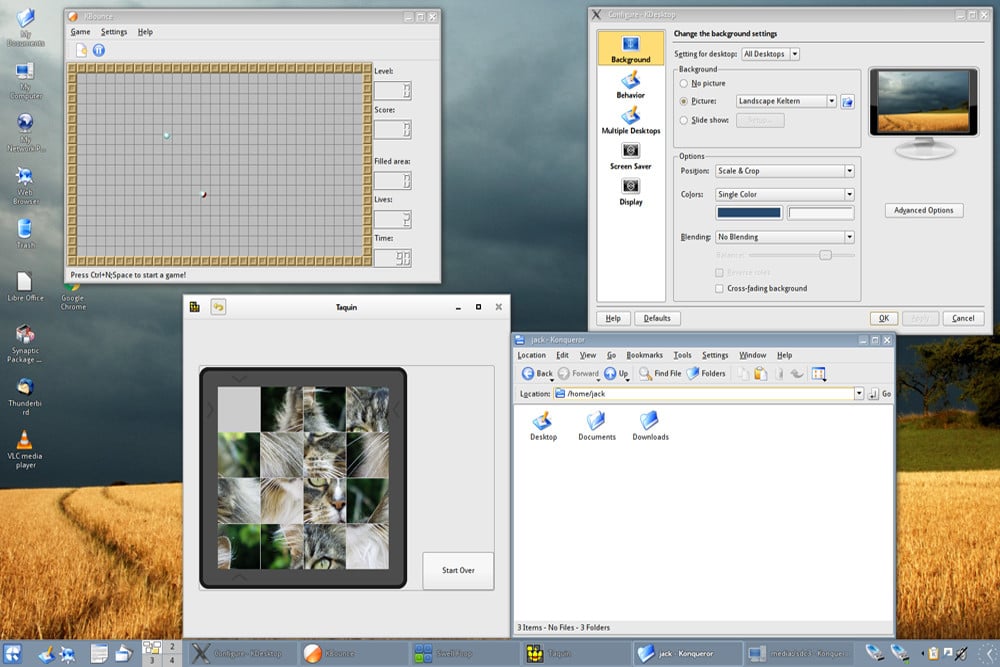
Fast, secure, and runs on old hardware (including 32 bit CPUs). Oh, and it's free. If you have a wheezing old Vista box, you might want to try this out.Debian-based Q4OS, developed by a team of software designers in Germany, has a lightweight design that allows it to run on nearly any hardware config. I have run it on ageing computers from the early days of Windows Vista.
Top 7 baseball films
It's World Series time, and so here are the top 7 baseball films. These may tide you over until spring training:
(Not in the running) Field Of Dreams. I just can't get over the implausible premise ("Build it and they will come"), and this is my list. Other than that, it's a fine film. I think you can watch this with your kids and grandkids, assuming you want to watch it. But I think I fell asleep watching it so I can't really remember.
7. Angels In The Outfield. Sure, it's as predictable as a sunny summer day. Sure, it's made by Disney. Sure, it has complete games getting pitched long after they stopped pitching complete games. It's a fun romp that is 100% kid friendly. Quotable quotes: "It could happen!".
6. A League Of Their Own. Remember nostalgia? Quotable quote: "There's no crying in baseball! You know why? Because there's no crying in baseball!" You can watch this with your kids or grandkids.
5. Major League. This is slapstick and entirely predictable but funny as hell. Do not watch this with your kids or grandkids. Quotable quote: "Just a reminder, fans, comin' up is our 'Die-hard Night' here at the stadium. Free admission to anyone who was actually alive the last time the Indians won a pennant."
4. Sandlot. This is a coming of age story reminiscent of the old saying: In spring, a young man's thoughts lightly turn to thoughts oflove baseball. Quotable quote: "You're killing me, Smalls!" (Sandlot).
3. Fever Pitch. It's about the 2004 Red Sox. Sure, it's a romantic comedy. Did I mention that it was about the 2004 Red Sox? You probably should not watch this with your kids or grandkids, since there are some bedroom scenes. Quotable quote: "Careful, kid. They'll break your heart." Did I mention that it was about the Red Sox?
2. Moneyball. This is a great story about how "Big Data" changed the game of baseball. Except for some language, this is safe to watch with your (older) kids or grandkids (younger kids are likely to lose interest). Quotable quote: "It's hard not to be romantic about baseball. This kind of thing, it's fun for the fans. It sells tickets and hot dogs. Doesn't mean anything."
1. Bull Durham. It tells the story of the people who don't make it to The Show, both the players and the people who root for them. It is very bitter sweet, and tells a story of striving and losing. Important note: You can not watch this with your kids or grand kids. Quotable Quote: "Don't try to strike everybody out. Strikeouts are boring! Besides that, they're fascist. Throw some ground balls - it's more democratic."
(The idea for this list was shamelessly stolen from Chris Lynch. You do read him every day, don't you?)
(Not in the running) Field Of Dreams. I just can't get over the implausible premise ("Build it and they will come"), and this is my list. Other than that, it's a fine film. I think you can watch this with your kids and grandkids, assuming you want to watch it. But I think I fell asleep watching it so I can't really remember.
7. Angels In The Outfield. Sure, it's as predictable as a sunny summer day. Sure, it's made by Disney. Sure, it has complete games getting pitched long after they stopped pitching complete games. It's a fun romp that is 100% kid friendly. Quotable quotes: "It could happen!".
6. A League Of Their Own. Remember nostalgia? Quotable quote: "There's no crying in baseball! You know why? Because there's no crying in baseball!" You can watch this with your kids or grandkids.
5. Major League. This is slapstick and entirely predictable but funny as hell. Do not watch this with your kids or grandkids. Quotable quote: "Just a reminder, fans, comin' up is our 'Die-hard Night' here at the stadium. Free admission to anyone who was actually alive the last time the Indians won a pennant."
4. Sandlot. This is a coming of age story reminiscent of the old saying: In spring, a young man's thoughts lightly turn to thoughts of
3. Fever Pitch. It's about the 2004 Red Sox. Sure, it's a romantic comedy. Did I mention that it was about the 2004 Red Sox? You probably should not watch this with your kids or grandkids, since there are some bedroom scenes. Quotable quote: "Careful, kid. They'll break your heart." Did I mention that it was about the Red Sox?
2. Moneyball. This is a great story about how "Big Data" changed the game of baseball. Except for some language, this is safe to watch with your (older) kids or grandkids (younger kids are likely to lose interest). Quotable quote: "It's hard not to be romantic about baseball. This kind of thing, it's fun for the fans. It sells tickets and hot dogs. Doesn't mean anything."
1. Bull Durham. It tells the story of the people who don't make it to The Show, both the players and the people who root for them. It is very bitter sweet, and tells a story of striving and losing. Important note: You can not watch this with your kids or grand kids. Quotable Quote: "Don't try to strike everybody out. Strikeouts are boring! Besides that, they're fascist. Throw some ground balls - it's more democratic."
(The idea for this list was shamelessly stolen from Chris Lynch. You do read him every day, don't you?)
Sunday, October 29, 2017
The difference between Baseball and Football
The World Series opens with the (televised) national anthem. All the players are standing, with their hands over their hearts.
The NFL doesn't allow the broadcasting of the national anthem. To ask why not is to answer the question.
Just another one to add to Tom Boswell's list.
The NFL doesn't allow the broadcasting of the national anthem. To ask why not is to answer the question.
Just another one to add to Tom Boswell's list.
An Excerpt From Calexit the Anthology -A Brigid Guest Post

- which has gone live on Kindle or
"She gently pats the small firearm in her pocket. It’s illegal, one of the many things, it seems, that’s called illegal here in Cali anymore. Breaking the law is not in her blood, but without it, her blood could be spilled.
From the beginning of time, there have been laws; there have been tools that can be used as weapons, including firearms. There has been good and evil. There have been two distinct and competing impulses that exist among humans, one, the instinct to live by the law, to act peacefully except in matters of self-defense, to follow moral commands for the good of the group; and the other, the instinct to gratify one's immediate desires without adherence to any such law or moral code, using violence, not as a means of protection, but to simply to obtain supremacy over others or force one’s will on someone without defense.
How did that all change, she thinks, to where we are in a world where everyone expects something for free, laws and the Constitution are whims, and those in power do anything they can to stay there, even if it means blood continues to flow in the street? How did we get to a point where greed and self-entitlement broke this once proud land away from our country, which she STILL believes is HER country, with a savage force that would put any earthquake to shame?
She steps outside to lock the gate. It’s only one additional thing between the forest and her door, but she sleeps better knowing it is locked, not fear of the four-legged creatures but of the two-legged ones. When she first moved here she replaced the pin tumblers on her gate, grooming station and supply shed with magnetic and combination to make them less easy to “lock-bump” and break in.
A hundred yards away, there is a moonlit lane between pine trees and stone. There in the shadows, only steps away, a long shadow shifts. She stops, sensing movement, sensing darkness within the dark, in the woods past her clothesline. Her hand moves to her firearm, poised to use it if needed. It is only a fox, easing back through the trees; a shadow, a form that slides like light through a picket fence, slanting sideways, and then disappears under cover. Her hand eases away from her weapon, but she backs away, towards the candlelight, towards home and sleep.
She walks quietly back towards the house. She goes a different time each day, knowing that predators rely on patterns. There in the distance, a couple of coyotes, trotting along the edge of the meadow, through snow that clutched at their empty bellies, heads cocked, eyes forward, using instinct, tooth and sinew to find that one small morsel there breathing under the snow, trying to hide for its life, a small shivering rabbit, wishing as desperately not to be eaten alive as the coyote desperately wishes to consume. The coyote stops to look at her in the stark moonlight, with what looks to be a smile on his face, not one of welcome but of mockery; the smile of a predator. He watches as she moves on down the road towards her door, round in the chamber, ready if needed.
She walks back towards the house when from the edge of the woods comes motion and sound, a blurred commotion, a high pitched, soft pleading scream that breaks the lie of safety. She looks towards the trees and sees something darting quickly, a dark shape, too small to be human, too quick for her to catch a good glimpse. There, in the ditch, a small white form, a jagged tear in its furry throat, rabbity legs twitching in the remembrance of life.
As she bolts the door behind her for the night, the abandon and innocent glee that was childhood remain forever lodged in her mind, just as do those lessons, even the painful ones. She puts her hands up to her nose and smells the faint, clean scent of soap, something so plain and simple, much like what once stood for truth. Today, she is no longer trusted with either a weapon or a voice but the Calis can’t take her honorable heart. What guides her to maintain that honor is not a law, it is not the dictate of a ruling body, and it is bound to her by the honor of the past and the examples of her upbringing.
She moves into the house, ears listening to anything unusual, eyes looking for anything out of order, a habit that is not fear but caution, locking the door behind her, prepared and aware. Outside, the snow blankets the ground with a soft innocence, hiding more than the ground but the very risks of the wild that play out in the night, beyond her sight.
She looks outside one last time to make sure she is alone, the evening air cooling her blood, the field empty and quiet, except for the steady sound of a small wounded animal, a ceaseless and unemphatic cry into the wind."
Also included in the anthology are stories by many well-known authors you will recognize along with a couple of new authors who many of you have read on their blogs. It was a great group of men and women to work on this with and I think we are all very proud of the effort and the organization by Gray Man Series author Jim Curtis in making it happen. Thank you, everyone, for supporting it.
When California declares independence, their dreams of socialist diversity become nightmares for many from the high Sierras to the Central Valley. Follow the lives of those who must decide whether to stand their ground or flee!
In San Diego, the commander of Naval Special Warfare Group One finds his hands tied by red tape, even as protesters storm the base and attack dependents. In Los Angeles, an airline mechanic must beg, borrow, or bribe to get his family on the plane out before the last flight out.
Elsewhere, a couple seeks out the new underground railroad after being forced to confess to crimes they didn't commit. In the new state of Jefferson, farmers must defend themselves against carpetbaggers and border raiders.
And in the high Sierras, a woman must make the decision to walk out alone...
Giuseppe Tartini - Devil's Trill Sonata
Halloween is upon us, and so appropriately fiendish music is the order of the day. Giuseppe Tartini is the first person that we know owned a Stradivarius violin, and was renowned for his skill on that instrument. This is his most famous composition, and is notoriously difficult to play. One legend is that he had six fingers, which allowed him to perform like no other in his day.
It is said that this music came to him in a dream, a dream where he sold his soul to the Devil:
It is said that this music came to him in a dream, a dream where he sold his soul to the Devil:
One night, in the year 1713 I dreamed I had made a pact with the devil for my soul. Everything went as I wished: my new servant anticipated my every desire. Among other things, I gave him my violin to see if he could play. How great was my astonishment on hearing a sonata so wonderful and so beautiful, played with such great art and intelligence, as I had never even conceived in my boldest flights of fantasy. I felt enraptured, transported, enchanted: my breath failed me, and I awoke. I immediately grasped my violin in order to retain, in part at least, the impression of my dream. In vain! The music which I at this time composed is indeed the best that I ever wrote, and I still call it the "Devil's Trill", but the difference between it and that which so moved me is so great that I would have destroyed my instrument and have said farewell to music forever if it had been possible for me to live without the enjoyment it affords me.Whether there is any truth to this (or to the claim of six fingeredness) is lost in the mists of time.
Subscribe to:
Posts (Atom)